Jewelry Maker Tool Chest & Watch Repair Tool Storage Guide
By Tomáš Novák • 6th Jun

A jewelry maker tool chest and watch repair tool storage system are not decor; they're production equipment. If your drawers rattle, lids drift open, or delicate tools live in random plastic trays, you are bleeding time and risking damage every day.
I've watched an entire day go sideways because a mobile chest shook itself loose rolling between rooms (tiny parts everywhere, cords yanked, fine tools dinged). That's when I stopped treating storage as furniture and started treating it like mission-critical kit. If it rattles, it's stealing seconds from you.
This guide breaks down the real problems with typical setups, agitates why they quietly wreck your throughput, then gives you a practical, field-tested system for precision watch tool organization, ESD-safe jeweler storage, and a jewelry making workstation that’s built to be rolled, not worshiped.
Problem: Why Most Jewelry & Watch Benches Are Silent Time Leaks
Let's name the mess you're probably fighting now:
- Mixed drawers: gravers in with pliers, burrs rolling under hammers, loupe hiding under a polishing cloth.
- Dust and grit from sawing, filing, and polishing drifting over to your "clean" stone-setting or movement work.
- Watch tools piled in generic trays - oils next to screwdrivers next to spring bar tools - with no clear zones.
- No ESD-safe thought at all near quartz movements, timegraphers, or diagnostic electronics.
- Cheap drawer units and hobby chests that shift, flex, and rattle when you open a fully loaded drawer.
- Zero standardization: you can't describe where a tool lives in one sentence a new hire can follow.
For professionals with pro-grade expectations, this clashes hard with a lean, 5S mindset. You know the standard:
Most-used tools should be in your hand within 10 seconds, from your primary working position.
Yet in a typical jewelry or watch shop, that's not what happens. You bend, pivot, search, move trays, and reopen the same drawers over and over.
What's Unique About Jewelry & Watch Work
Jewelry and watch work magnify storage flaws because:
- Your primary tools are small, fragile, and high-precision. Watch screwdrivers, pin pushers, non-magnetic tweezers, crystal lifts, and demagnetizers are unforgiving of knocks, dust, and magnetized clutter.
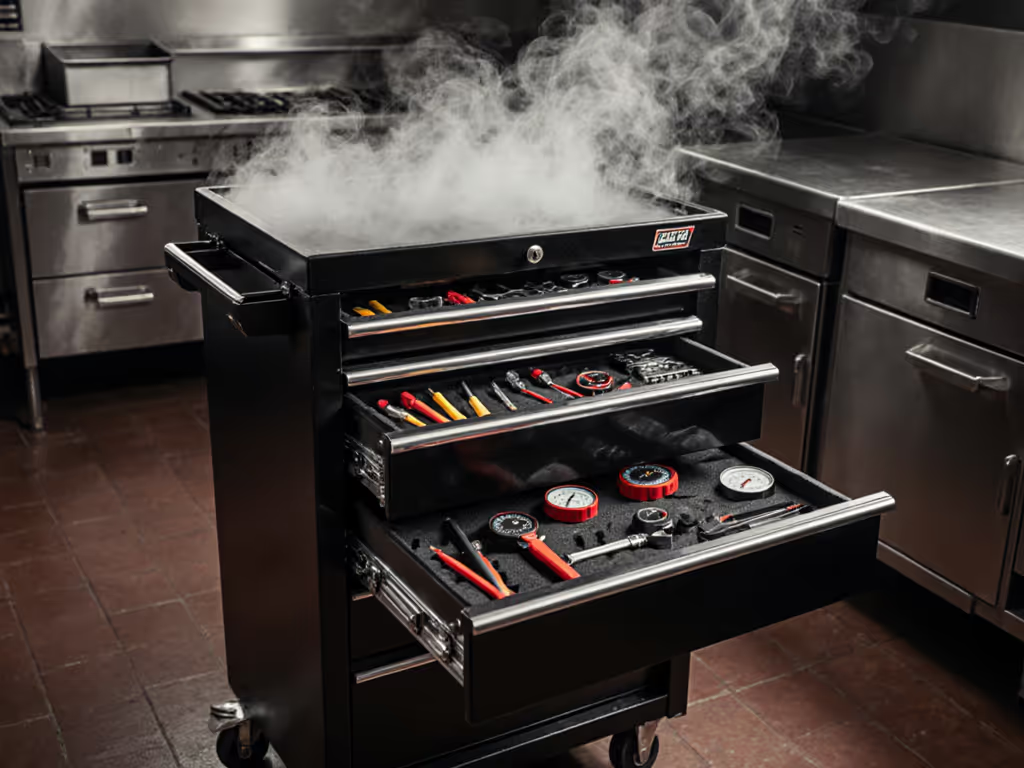
- Many processes are dirty by design - sawing, filing, polishing, pickling, soldering. These generate dust, slurry, and fumes that will ruin oils, movements, and polished stones.
- You work in phases: design, forming, soldering, cleanup, stone setting, assembly, timing. Each phase wants a tight, localized tool set within arm's reach.
- You often juggle multi-purpose benches: one area doing jewelry fabrication, another doing watch repair, sometimes on the same surface.
If your storage doesn't respect those realities, your bench becomes a negotiation every time you switch tasks.
Agitate: What Disorganized Storage Really Costs You
Let's get specific. Disorganized jewelry maker tool chest and watch repair tool storage setups hit you in four ways: time, defects, safety, and morale.
1. Time: Death by a Thousand Drawer Slides
Count the micro-delays:
- 5-10 seconds hunting for the right size watch screwdriver in a shared cup.
- 15 seconds rearranging pliers and mandrels to find the ring mandrel you use every hour.
- 20 seconds wiping grit off your ESD mat because you store files and polishing abrasives above the watch station.
Multiply that by a few dozen events per day and you quietly lose 20-40 minutes of productive work. For proven layouts that speed retrieval, see our tool chest organizer ideas. Every. Single. Day.
And that's in a small shop. Scale that to a multi-bench environment and you're paying real money for that chaos.
2. Defects and Rework
Loose, poorly managed storage also creates immediate risk:
- Grit in watch movements from open trays sitting under a polishing area.
- Oils contaminated because the vials roll in a drawer with unsealed abrasives and filings.
- Misplaced or mixed burs causing incorrect seat sizes for stones, leading to rework or scrap.
- Magnetized screwdrivers and tweezers stored near improvised magnets, gradually damaging watch performance until a demagnetizer rescues it (if you notice).
These are all confirmed failure modes by working watchmakers and jewelers: dirty environments, mismanaged tools, and magnetism are notorious sources of trouble.
3. Safety and Cleanliness
Jewelry and watch shops mix chemicals, heat, dust, and sharp tools:
- Soldering torches, flux, pickle pots, and acid solutions live near flammable polishing compounds and paper.
- Ultrasonic cleaners, steamers, and motors demand safe power routing and splash-resistant zones.
- Fine dust from polishing and grinding is a respiratory hazard and a contamination risk for movements and stone seats.
A sloppy layout turns your storage into a fire load and a contamination engine.
4. Vibration & Rattle: The Hidden Enemy
Most people treat micro-tool storage as static: small plastic drawers or cheap metal caddies. But the second you mount that on a rolling chest, cart, or under-bench mobile base, vibration becomes central.
Drawers without positive latches creep open. Trays ride up on slides and slam when you hit a threshold. Tiny screws and watch parts migrate to corners and under dividers. Tool handles bang, dulling edges and bruising fine finishes.
I've watched a chest literally rattle its fasteners loose over a long corridor push. After that job, I started giving chests the same test I give a van rack: if it can't survive a long, rough roll without opening or shaking, it has no place on my floor.
If it rattles, it's stealing seconds from you.
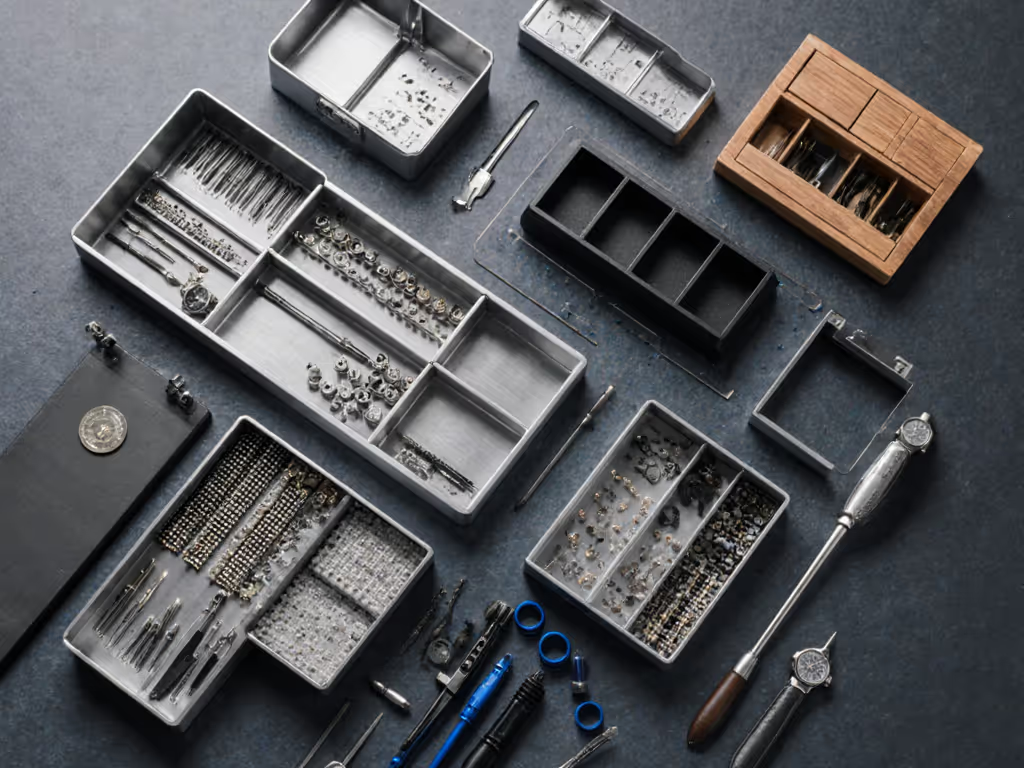
Solve: A Systems Approach to Jewelry & Watch Tool Storage
Now we fix it. The solution is not "buy nicer drawers." It's a system: platform choice, zoning, inserts, and rules.
We'll walk it in three layers:
- Define your tool sets and zones.
- Choose the right storage platform: three archetypes, reviewed like products.
- Build drawer interiors and workflows that survive real work.
Along the way, we'll bake in ESD-safe jeweler storage, precision watch tool organization, and a micro-tool chest for artisans that can move without drama.
Step 1: Map the Work - What Are You Actually Storing?
Before you touch a chest, list and group tools. Don't skip this.
Core Jewelry Tool Families
Common categories in a jewelry making workstation include:
- Forming & cutting - saw frames, blades, shears, snips.
- Pliers & hand tools - round-nose, chain-nose, flat-nose pliers, cutters.
- Files & abrasives - needle files, larger files, sandpaper, emery sticks.
- Hammers & striking tools - chasing, ball-peen, rawhide/nylon mallets.
- Mandrels & forming stakes - ring mandrels, bracelet mandrels.
- Soldering setup - torch, soldering block/board, flux, solder (hard/medium/easy), third hands.
- Pickle & cleaning - pickle pot, tongs, ultrasonic cleaner, steam cleaner.
- Stone setting gear - burs, drill bits, gravers, bezel pushers/rollers, prong tools.
- Measuring & layout - calipers, rulers, dividers, scribes, markers.
- Safety - safety glasses, masks/respirators, gloves, fire extinguisher.
Each category implies specific storage needs: height, dust exposure, chemical resistance, and frequency.
Core Watchmaking & Watch Repair Families
A functional watch repair station will have:
- Optics - loupes, maybe a microscope.
- Case tools - knife-style case openers for snap-on backs, screw case openers.
- Bracelet & strap tools - spring bar tools, pin removers, bracelet sizing jigs.
- Movement holding & handling - movement holders, watch holders for case work.
- Fine drivers & tweezers - sets of precision screwdrivers and non-magnetic tweezers.
- Lubrication - watch oils, oilers, and storage for different viscosities.
- Cleaning - ultrasonic cleaner, Rodico-style putty, cloths, dust blowers.
- Diagnostics & support - demagnetizer, timegrapher, digital calipers, UV flashlight.
Here, the big enemies are dust, magnetism, vibration, and static. Your storage must explicitly counter each.
Step 2: Choose Your Platform - Three Storage Archetypes Reviewed
You may not have specific brand names in mind yet, but you are effectively choosing between three archetypes. I'll treat them like products and review them accordingly.
1. Rolling Micro-Tool Chest for Artisans
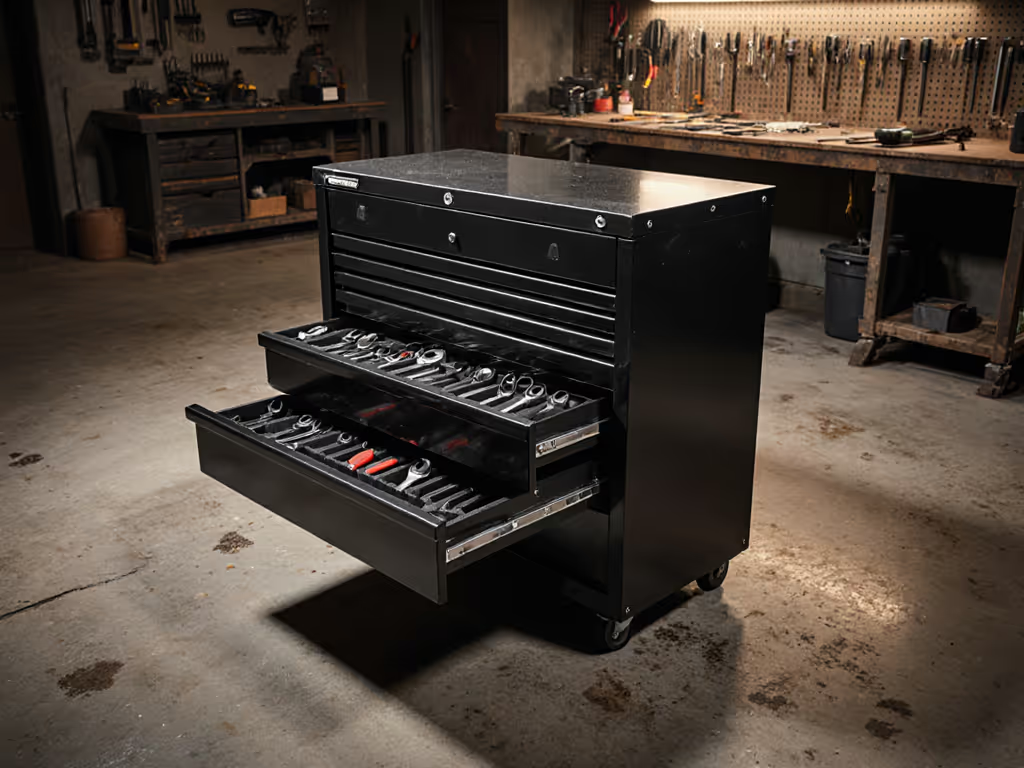
Think of a low-profile rolling chest that can tuck under a bench or dock next to it: multiple shallow drawers on quality slides, with real casters and a stable footprint.
Best for:
- Shared spaces or labs where benches shift or tools must be moved between rooms.
- Techs who want jewelry and watch tools in one mobile, protected base.
What to demand:
- Shallow, full-extension drawers so small tools don't get buried in tall stacks.
- Positive latching on every drawer (either mechanical latches or lock-in detents) so loaded drawers don't creep during rolls.
- Overbuilt slides (not hobby-grade) that stay smooth with dense tool loads and don't rack when you pull one side.
- Large, soft casters tuned to your floor (hard wheels on soft floors, softer wheels on harsh concrete) with real bearings.
- A stiff frame that doesn't twist when one extended drawer is fully loaded.
Advantages:
- High-density storage in a small footprint; perfect for a full watch repair kit plus jewelry hand tools.
- Easy to rezone: jewelry on one side, watch on the other, or by task phase.
- Can be rolled into a cleaner room for watch assembly with minimal contamination.
Risks & caveats:
- Cheap units will rattle, flex, and transfer vibration straight into your tools.
- If drawer heights are too tall, you'll waste vertical space on micro tools.
- Weak casters make it effectively immobile once loaded, then you've just bought an awkward, low-quality fixed cabinet.
A micro-tool chest for artisans in this category must be judged on latch integrity, vibration response, and caster floor-interface first. To understand how slide types affect feel and longevity, compare ball bearing vs roller vs soft-close drawers. The paint color does not matter.
2. Benchtop Watch Repair Organizer
This is a compact, often modular drawer and tray system sitting on or built into your main watch bench.
Best for:
- Dedicated watchmakers who rarely move the station.
- High-priority emphasis on dust control and motion efficiency.
What to demand:
- Very shallow drawers or trays, ideally just tall enough for one layer of tools.
- Tight tolerance on drawer fit to limit dust ingress.
- Integrated or compatible dust covers you can place over in-progress movements and dial/hand sets.
- At least one ESD-safe work surface and clearly separated areas for dirty case work vs clean movement work.
Advantages:
- Fastest possible retrieval times: everything within arm's reach, minimal body movement.
- Easier to maintain a clean "bubble" for movement assembly.
Risks & caveats:
- Limited capacity; you may still need a lower chest for bulk items.
- If materials are flimsy (thin plastic drawers), they warp and bind, and dividers pop out when loaded.
Benchtop organizers live or die on dust control, layout clarity, and smooth slides. Any unit that feels wobbly or develops play after a few months will turn into a junk drawer farm.
3. Modular Drawer Tower for Jewelry Making Workstations
This is a taller, more static drawer system dedicated primarily to jewelry tools and materials.
Best for:
- Shops with high-volume jewelry work and multiple stations.
- Situations where watchmaking is either minimal or a separate clean bench.
What to demand:
- Mixed drawer heights: deep lower drawers for hammers, mandrels, rolling mill accessories; shallow uppers for burs, stones, and small tools.
- Chemical-resistant liners and drawer interiors to survive flux, pickle splashes, and polishing compound dust.
- Strong slides rated for heavy items like mandrels, hand tools, and punches.
Advantages:
- Easy to zone by process (forming, soldering, finishing, setting).
- Scales well - add towers as the shop grows.
Risks & caveats:
- If you tuck watch tools in here, they'll constantly be exposed to dust and contamination.
- Top-heavy designs with weak anchoring risk tipping when deep drawers are opened.
Quick Comparison: Which Platform Fits You?
| Use Case | Rolling Micro-Tool Chest | Benchtop Watch Organizer | Modular Jewelry Drawer Tower |
|---|---|---|---|
| Mobility | High | Low | Low-Medium |
| Dust Control for Watch Work | Medium-High (if drawers seal well) | Highest | Low |
| Jewelry Tool Capacity | Medium | Low | High |
| Vibration Risk | Medium-High (depends on quality) | Low | Low |
| Best For | Hybrid jewelry+watch, shared labs | Dedicated watch bench | High-volume jewelry production |
Most serious shops end up with two of the three: a mobile base plus either a dedicated watch station or a tall jewelry tower.
Step 3: Inside the Drawers - Organization That Survives Real Work
Hardware choice gets you 50% of the way. The rest is interior layout and hard rules.
Zoning: Dirty vs Clean, Jewelry vs Watch
First layer separation:
- Dirty zone: sawing, filing, polishing, soldering, pickle, steam cleaning.
- Clean jewelry zone: stone layout, fine measurements, final polish.
- Watch dirty zone: bracelet and case work, case opening, strap swaps.
- Watch clean zone: movement, dial, hand work, oils, diagnostics.
Your storage must respect this:
- Dirty processes get their own drawers/cabinets with easy-to-clean liners.
- Clean zones get the best drawers: shallow, dust-controlled, close to eye level, with space for covered trays.
Inserts: Foam, Trays, and Dividers
Use inserts that can keep up with evolving kits:
- Adjustable dividers for pliers, cutters, and small hand tools in jewelry drawers.
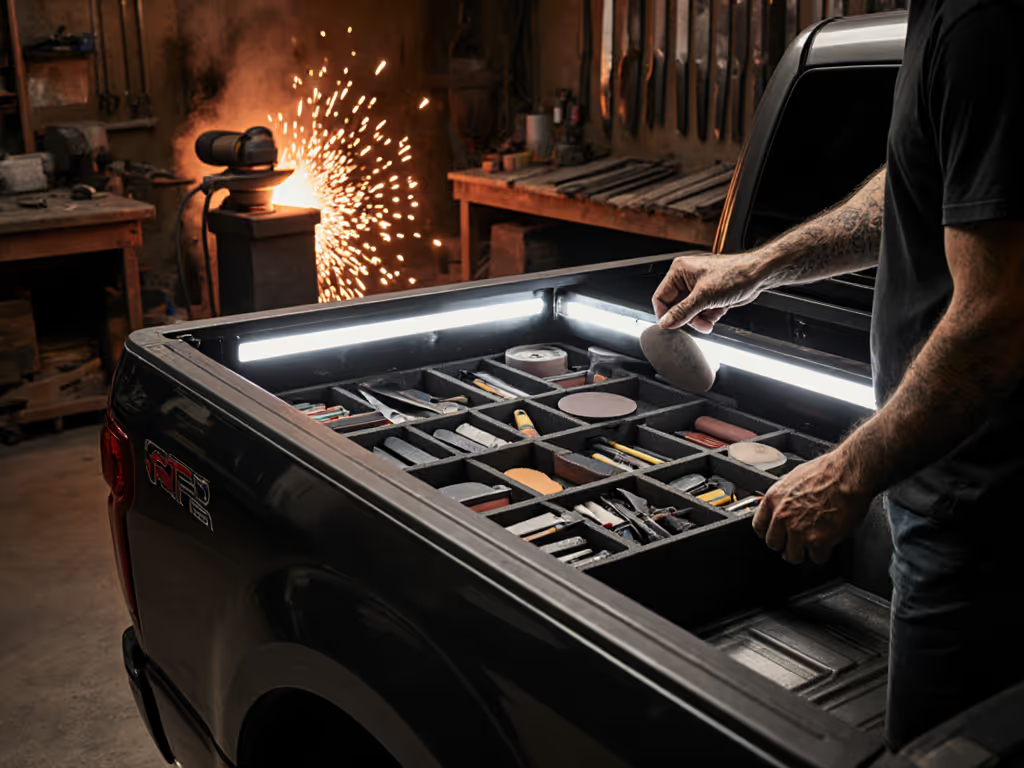
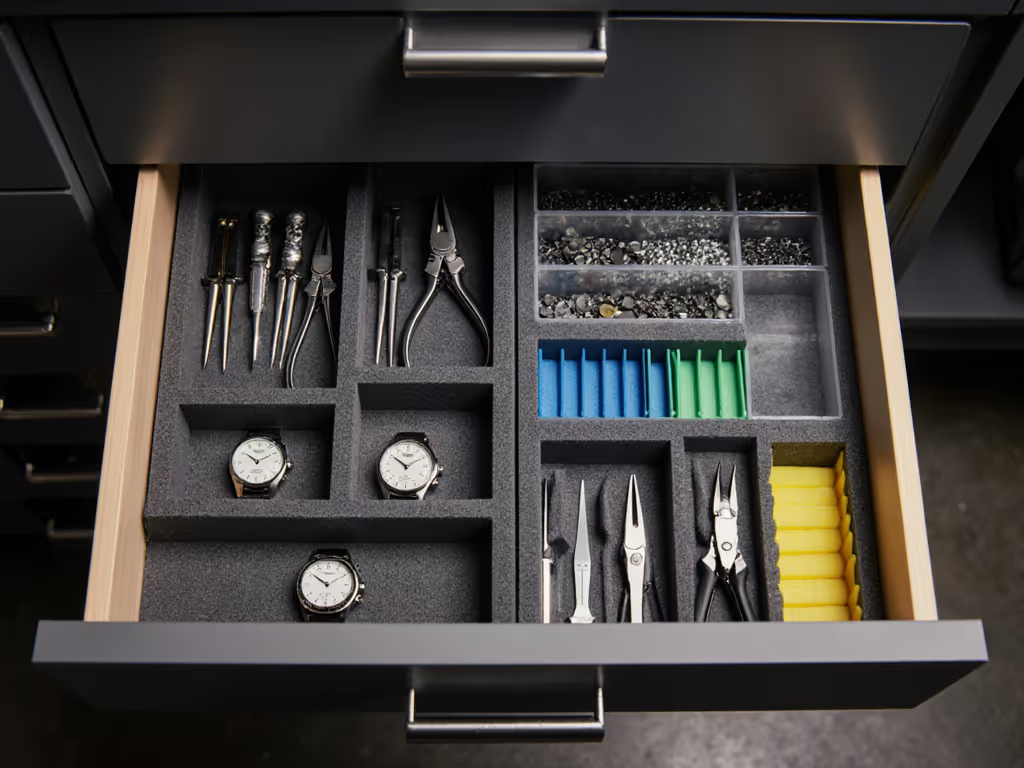
- Custom foam or rail blocks for precision watch screwdrivers and tweezers so each tool has a named home.
- Small parts trays for screws, jewels, and tiny components; keep them lidded or under a dust cover when not in use.
- Bur blocks and stone trays with clear indexing so you can see missing items at a glance.
Avoid permanent, one-shot foam shadowing for every single tool unless your sets are stable. If you do choose foam, use our guide to optimizing tool chest foam for reconfigurable, labeled layouts that speed audits. Jewelry and watch kits evolve; you need reconfigurable systems to avoid constant foam rework.
ESD-Safe Jeweler Storage
For any bench doing quartz or electronic watch work, or using test instruments:
- Install an ESD mat at the watch clean zone and connect it to a verified ground.
- Keep ESD-sensitive items (movements, timing electronics) in a dedicated drawer with antistatic liners.
- Do not store magnets or unshielded motors in that stack of drawers.
Electronics in watchmaking (like timegraphers and digital diagnostics) are increasingly common, and ESD-safe handling is standard practice in electronics work; your storage should reflect that. If humidity threatens oils, movements, or finishes, follow our climate-controlled tool storage guide to prevent moisture damage.
Power, Cord Routing, and Wet Gear
Think through everything that plugs in:
- Jewelry: ultrasonic cleaners, steam cleaners, polishing motors, Dremel-style tools, rolling mills with motors, task lights.
- Watch: ultrasonic cleaners, demagnetizers, timegraphers, microscopes, LED inspection lamps.
Practical rules:
- Keep power strips off the floor and away from splash zones (pickle, ultrasonic, steam).
- Route cords along the back of benches, through grommets or pass-throughs if available.
- Dedicate a "wet drawer/zone" for ultrasonic and steam accessories, wipes, and PPE, with waterproof liners.
- If you mount tools or chargers in drawers, ensure ventilation slots so heat can escape.
Cord chaos around tiny watch parts is a recipe for snagging and spills. Power management is part of tool control.
Vibration & Rattle Checks: Don't Let Motion Wreck Precision
Any storage that rolls (or sits on something that does) gets a vibration and rattle check before I trust it.
Here's how to test:
- Load the chest with realistic weight: tools, trays, liquids.
- Lock any caster brakes off.
- Roll it 30-50 meters over your worst-case path: thresholds, expansion joints, elevator gaps.
- Listen and watch:
- Do drawers creep open or visibly bounce?
- Do dividers jump, trays shift, or tools slap metal?
- Does the frame twist when a single open drawer is loaded?
If any drawer opens without you touching the latch, that's a fail. Sticky or noisy drawers often just need proper care—use our drawer slide maintenance and lubrication guide to restore smooth, quiet performance. If you can hear individual tools clanging beyond an initial settle, it's a fail. Built to be rolled, not worshiped means it should stay closed, quiet, and aligned under real-world motion.
Mitigations:
- Add thin rubber or cork liners to reduce tool slap.
- Prefer metal drawer organizers over brittle plastic that rattles and cracks.
- Place heaviest items low: mandrels, hammers, pickle, bulk metals. Keep the center of gravity down.
- For watch tools, keep movements, oils, and fragile parts in the most stable center drawers, not the very top.
Standardization & Scaling Across Benches
If you run more than one station, you want any tech to be productive at any bench within minutes.
Drawer Maps and Labels
- Create a simple drawer map: overhead view of the chest with numbered drawers and a short list for each.
- Use solvent-resistant labels or engraved tags; polishing and cleaning chemicals are harsh.
- Standardize between benches: "Drawer 1 = precision drivers and tweezers" at every watch station; "Drawer 3 = pliers set" at every jewelry bench.
Color and Shape Coding
- Color code zones: blue for watch, red for jewelry, green for shared tools.
- Use different tray shapes or insert colors so your hands learn locations by feel and sight.
Audit and Tool Control
- Keep a master list of high-value tools per station (microscopes, timegraphers, specialty drivers).
- Use foam or rail systems that make missing tools visually obvious.
- For regulated work or tight shops, consider sign-out logs for certain tools.
Standardization is where you start seeing measurable returns: faster cross-coverage, easier training, fewer "where did we put..." interruptions.
One-Week Implementation Playbook
You don't have to rebuild everything at once. Here's a practical seven-day rollout.
Day 1: Inventory and Red-Tag
- Pull everything out of current drawers.
- Group into the tool families listed earlier (jewelry vs watch, dirty vs clean).
- Red-tag: anything you haven't used in 3-6 months either gets archived or removed from prime space.
Day 2-3: Choose and Place Platforms
- Decide your primary combo:
- Solo or small shop: rolling micro-tool chest + benchtop watch organizer.
- Larger jewelry focus: modular drawer tower + dedicated watch station.
- Position chests so:
- Most-used drawers are between mid-thigh and chest height.
- Watch clean zone is insulated from dust-generating work.
Day 4: Build Interiors
- Install dividers, trays, and rail/foam systems in priority drawers.
- Rough-in zones:
- Jewelry forming/pliers.
- Jewelry soldering and surface prep.
- Jewelry finishing and setting.
- Watch dirty (bracelets, case tools).
- Watch clean (movements, oils, diagnostics).
Day 5: Label and Map
- Label each drawer clearly.
- Print and laminate drawer maps; mount one on the side/back of each chest and one in the shop SOP binder.
Day 6: Vibration and Workflow Testing
- Do the vibration and rattle check on any mobile units.
- Run three typical jobs (one jewelry, one strap or case job, one movement service) and time:
- Time to reach first tool.
- Number of drawer openings per job.
- Adjust zones or heights if you're constantly bending or crossing the bench.
Day 7: Lock the Standard
- Capture the final layout in photos and printed maps.
- Train everyone on the new zones and rules (like "no dirty tools in clean drawers, ever").
- Schedule a 10-minute weekly review for the first month to fix early issues.
Summary & Final Verdict
If you work with metal, stones, and movements for a living, your storage is part of your tooling. Treat it like a production asset, not a piece of furniture.
- A rolling micro-tool chest earns its space when it passes the rattle test, keeps micro tools in shallow, full-extension drawers, and moves without drama. Pair it with disciplined inserts and it's the best hybrid solution for shops doing both jewelry and watch work.
- A benchtop watch repair organizer is the upgrade that makes movement work safe and fast: shallow, clean, dust-controlled, and ESD-aware. Watch tools deserve their own clean island.
- A modular jewelry drawer tower is your heavy hitter for forming, soldering, and finishing - deep lower drawers for heavy gear, shallow uppers for burs and stones, and interiors that survive flux, pickle, and polishing grit.
Your goal is simple:
- Every tool has a named home.
- Your most-used tools are in your hand within 10 seconds.
- No drawer opens unless you open it.
- No movement or stone touches dust it doesn't absolutely have to.
Do a hard audit of your current setup. Open a drawer, roll your chest, and listen. If you hear rattling, that's your workflow leaking away.
Upgrade with intention - platform, zones, inserts, labels - and you'll feel the difference by the end of the first week: fewer lost tools, cleaner work, faster cycles, and benches that are genuinely built to be rolled, not worshiped.
Related Articles