Tool Chest Slide Maintenance: Lubrication & Schedules
By Aisha Khan • 10th May
Understanding Why Drawer Slide Lubrication Matters: A Throughput Lens
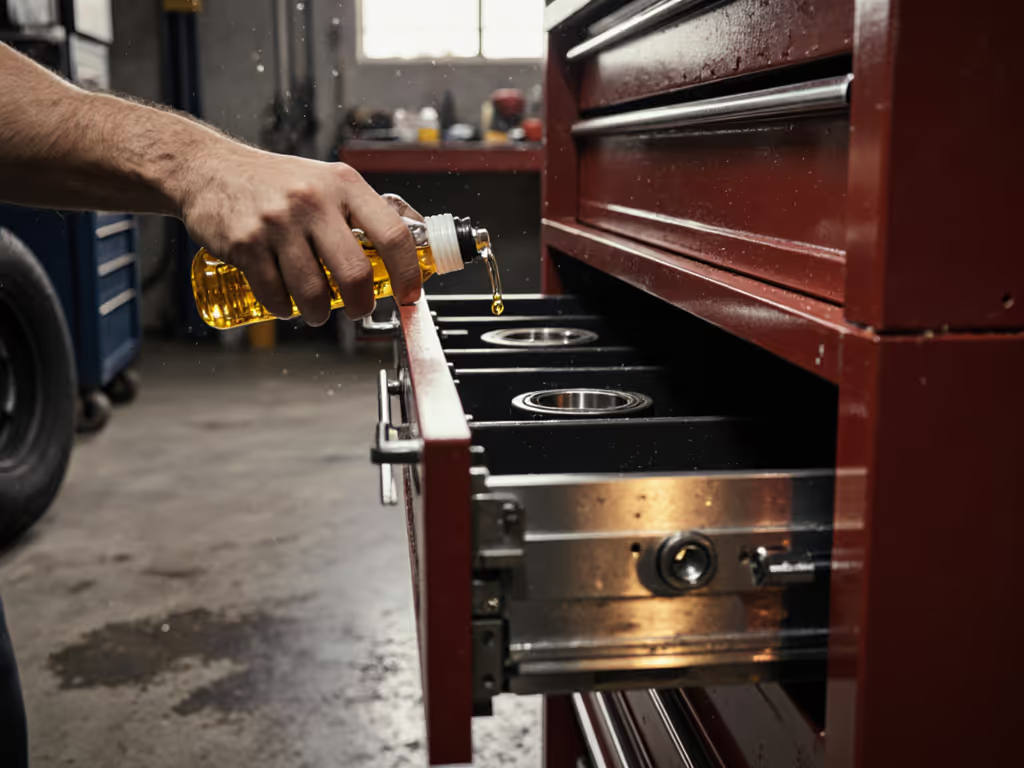
Tool chest slide maintenance and drawer slide lubrication responsibilities often get bumped to the bottom of a shop's priority list until drawers bind mid-shift or a half-open slide collapses under load. That's backwards. I learned this the hard way years ago when a crew scrambled through a late-night rush job hunting tools in a chest with seized slides (wasted motion that a simple maintenance map could have prevented). The corrective work that followed revealed a pattern: every 15-second stall waiting for a drawer to move translated to lost throughput per hour. A re-mapping of drawer access and a lubrication schedule cut retrieval times by 22 seconds per cycle and turned a bottleneck into a non-event.
Smooth slides are not a comfort feature; they are a production step. When tool cabinet slide upkeep is neglected, friction compounds across the day. Dust, coolant mist, and shop grime bond with old or absent lubricant, turning what should be a quarter-second glide into a grinding bind. This article decodes the maintenance schedule, lubricant selection, and inspection cadence so your drawers stay predictable and your uptime stays protected.
FAQ: Tool Chest Slide Maintenance Fundamentals
What Are the Main Slide Types, and Do They Need Different Lubrication?
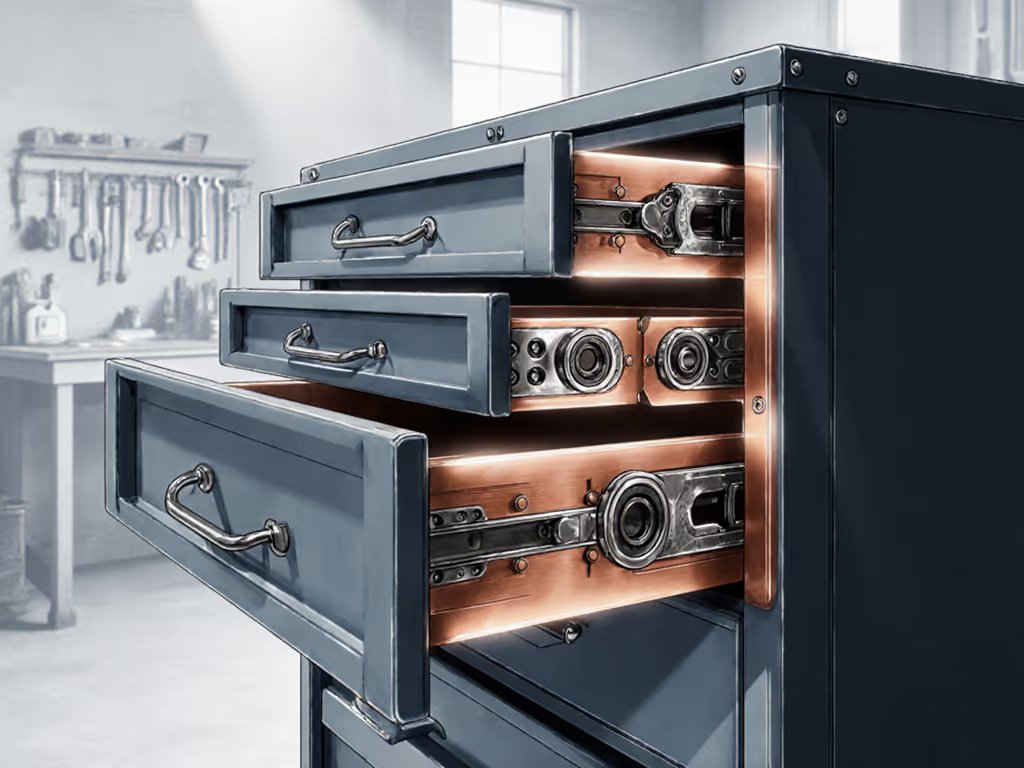
Ball bearing slide care depends on internal race geometry and sealing. Full-extension slides expose the ball carriage fully; partial-extension slides keep the carriage partially retracted when closed. Full-extension slides accumulate more exposed surface area and draw in more debris, so they demand more frequent inspection. For a deeper look at how ball bearing, roller, and soft-close designs differ, see our drawer mechanism comparison. Roller slides are rarer in modern chests but still found in older cabinets; they're less forgiving of contamination because roller surfaces don't self-center like ball races do.
Under-mount slides attach to the drawer underside; side-mount slides attach to the cabinet walls. Both need lubrication, but under-mount configurations are more vulnerable to splatter from below-bench work. Critical detail: side-mount slides often have shielding that protects the ball race; under-mount slides sometimes lack shields entirely. Inspection should factor that risk in.
The slide mechanism itself (whether it uses pressed pins, rivets, or welded assemblies) affects how lubricant stays put. Welded slides tend to hold lubricant longer because the races are more contained. Riveted assemblies sometimes develop micro-gaps over time, allowing lubricant to seep out faster. This is not a defect; it's engineering reality that drives maintenance cadence.
Why Does "Proper Drawer Lubrication" Go Wrong So Often?
Most technicians apply lubricant to a slide, the drawer glides smoothly for a week, then binding returns. The root cause: wrong lubricant type or incomplete application. Too-thick oil (like 10W motor oil or general-purpose 3-in-1 variants) pools in the races instead of flowing through. Too-thin penetrating oil (like general rust-release spray) washes away in hours when drawers open and close, cycling air and dust through the mechanism. Both create a false win: initial smoothness masks the fact that no stable lubricant layer formed.
Ball-bearing slides require a light machine oil or synthetic equivalent with viscosity in the ISO VG 32-46 range. Industrial shops often use these for pneumatic tool lubrication, so sourcing is straightforward. Viscosity that thick coats the races without collecting debris; viscosity that thin breaks down under friction heat or evaporates. The Goldilocks zone matters measurably. A drawer lubricated with the correct viscosity will glide consistently across 50 opening and closing cycles in a shift; one lubricated with the wrong oil will degrade noticeably by cycle 30.
Some technicians mistakenly apply grease. Grease works for low-speed, high-load applications like door hinges or caster joints, but ball-bearing slides operate at moderate speed with moderate load and need liquid-film lubrication. Grease gums up the races, collects particles, and turns into a drag brake inside 2-3 weeks.
What's the Data on Maintenance Frequency?
Tool chest maintenance schedule in a production environment should mirror takt time and shift length. For a typical 10-hour shift with a drawer used in 60+ retrieval cycles daily, inspect slides monthly and lubricate quarterly, or sooner if shop conditions are dusty. Fabrication shops with plasma cutting, welding, or grinding require more frequent lubrication (every 6-8 weeks) because airborne metal particles and oxide settle on slides faster. Electrical or HVAC shops with lower particulate loads can stretch to six-month intervals if environmental sealing is solid. For a plug-and-play calendar you can print, use our seasonal maintenance schedule tailored to different environments.
The measurable signal: a drawer that closes smoothly under its own weight at the final 2 inches (no hand assist needed) indicates adequate lubrication. A drawer that requires a final push, or one that coasts to a close inconsistently, flags degraded lubrication film. Check monthly; act within a week of detecting this signal.
Load cycling also matters. A lightly-loaded drawer (hand tools, small parts) cycles 30-40 times per shift; a heavily-loaded diagnostic drawer (power tools, test gear) cycles 15-20 times but with 3-4 times the friction. Heavy-use drawers degrade lubricant film faster, so a staggered schedule (quarterly for standard use, every 6-8 weeks for high-load drawers) is worth the administrative effort. Drawer utilization percentages should inform maintenance tiers.
Stopwatch says the layout works; the clock never lies.
How Do You Lubricate Slides Properly?
Step-by-step:
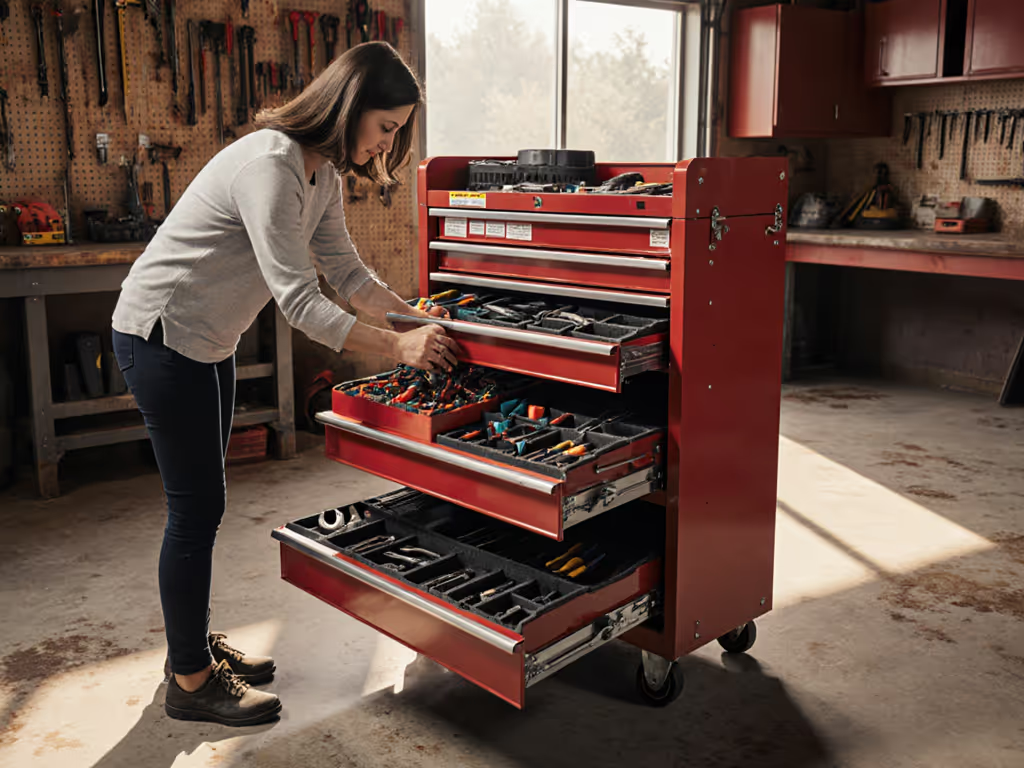
- Empty the drawer fully and remove it from the cabinet. Partial access misses most of the ball race.
- Inspect the entire slide assembly - both the slide rail (cabinet-mounted) and the slide carriage (drawer-mounted). Look for visible particles, discoloration, or corrosion. Compressed air or a brush removes loose debris; avoid water or solvents that promote rust if oil is not reapplied immediately.
- Apply lubricant to the ball race inlet and outlet points. Two or three drops per side is sufficient. Avoid over-application; excess lubricant attracts particles and drips onto tools. A precision dropper or an applicator bottle ensures control.
- Cycle the drawer in and out 8-10 times slowly, allowing the lubricant to distribute through the races and displace old residue.
- Wipe excess lubricant from the outer surfaces with a clean cloth. Cleanliness of the drawer body and cabinet exterior prevents cross-contamination.
- Reinstall the drawer and test under load. If you load it moderately and close it, the final 1-2 inches should glide without resistance.
Timing benchmark: a technician familiar with this process should complete a five-drawer chest (two-sided slides per drawer) in under 20 minutes. If the job takes longer, either slides have accumulated debris that needs deeper cleaning, or environmental conditions are worse than expected and warrant a review of storage placement or dust sealing.
What Are Early Warning Signs of Slide Failure?
Ball bearing slide care includes spotting degradation before catastrophic failure. Watch for:
- Grinding or scraping sounds: Metal-to-metal contact. Lubricant film has failed or fine particles are caught in the race.
- Inconsistent resistance: A drawer that glides smoothly halfway, then binds. Signals partial contamination or asymmetric wear.
- Lateral play or wiggle when the drawer is open: Worn bearings or loose fasteners. Not immediately unsafe, but accelerates damage if not addressed.
- Visible corrosion or discoloration on the slide rails: Rust indicates water intrusion or humidity exposure. Lubrication alone won't fix this; corrosion must be addressed with surface prep and seal improvement. Follow our rust repair and slide rehab guide for surface prep, protection, and lubrication sequencing.
If a slide exhibits these signs, don't just re-lubricate. Remove the drawer, clean the entire rail and carriage with a soft brush and light penetrating oil to dissolve old oxidation, let it dry, re-lubricate, and test. This deep clean takes 10-15 minutes per drawer but restores 80% of lost smoothness. If it doesn't, the slide assembly is nearing end-of-life and should be planned into CapEx.
How Do You Prevent Premature Failure?
Throughput first, then everything else (which means preventing downtime is cheaper than replacing failed components). Three preventative strategies:
-
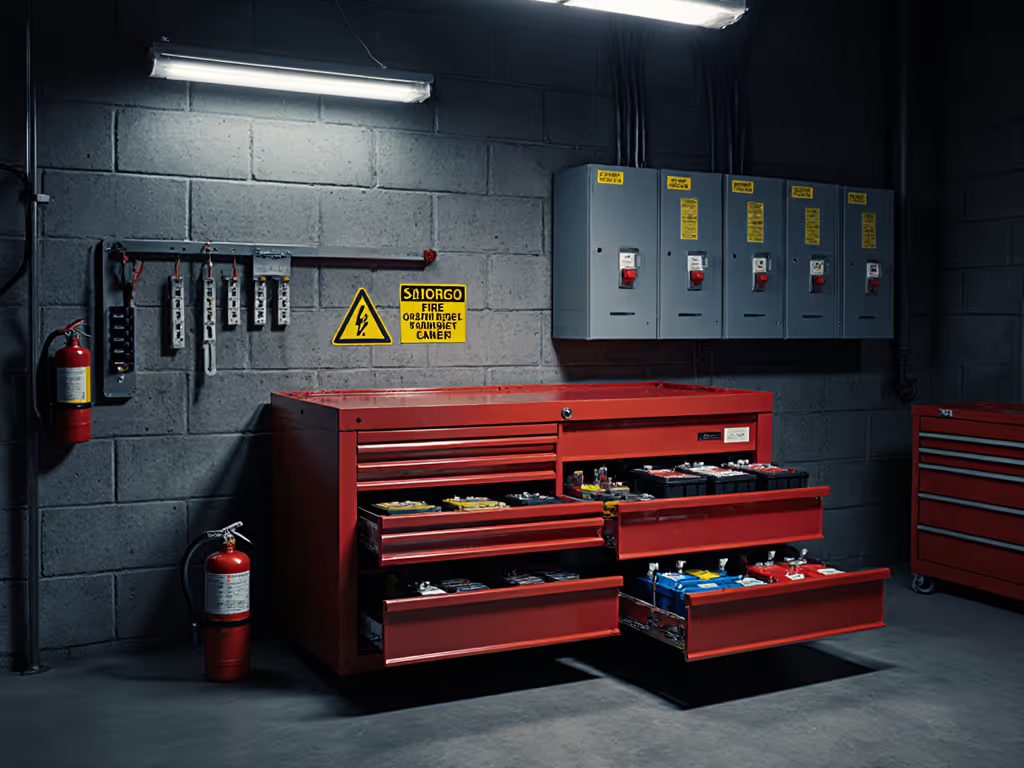
Seal the storage environment: Dust and humidity are the primary slide killers. Use cabinet feet spacers or dolly bases with wheels to lift chests off gritty floors. Gaskets on drawer fronts reduce infiltration. Simple weatherstripping around the cabinet perimeter pays dividends in slide longevity. If humidity is a constant in your area, use our climate-controlled storage guide to keep moisture from undoing your lubrication work.
-
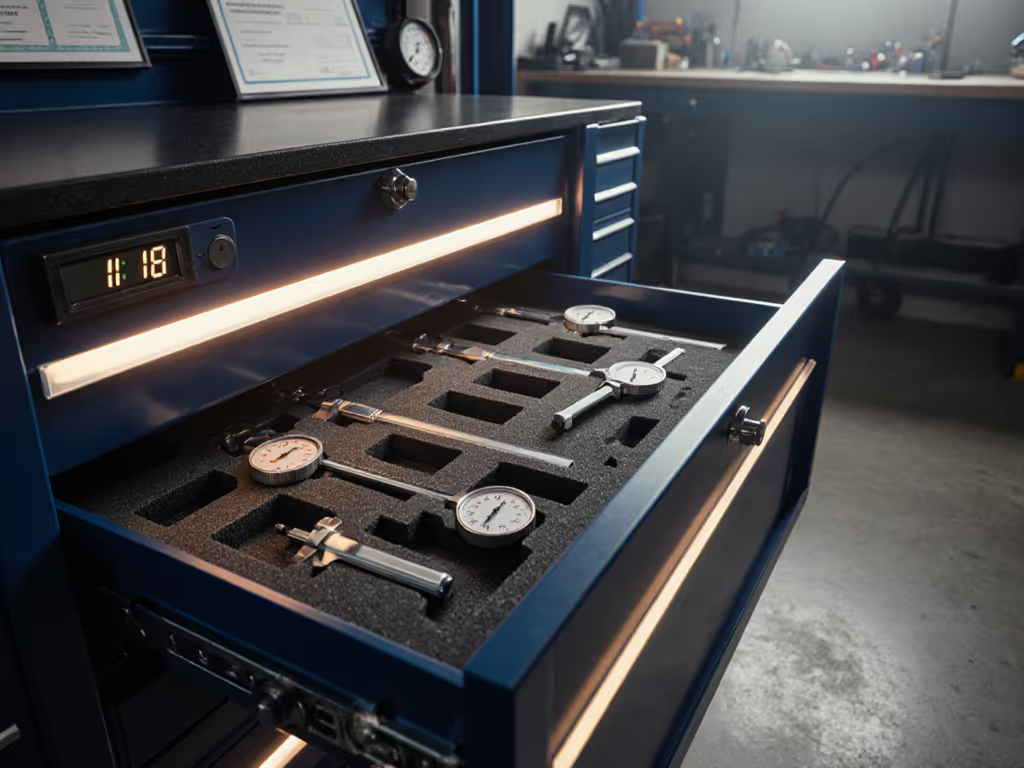
Establish a visual maintenance log: Post a checklist inside the cabinet with slide inspection dates. Monthly check, lubrication date, and initials take 30 seconds and create accountability. Visual management catches skips before they cascade into lost retrieval time.
-
Standardize lubricant and store a backup supply: Use only one oil type across your shop. Label and store it in a known location. A 1-liter bottle supplies dozens of lubrication cycles; purchasing a second bottle as backup ensures you never skip maintenance due to supply friction.
Summary and Final Verdict
Tool chest slide maintenance is not optional; it's a scheduled upkeep task with measurable ROI. Drawer slide lubrication on a quarterly cadence (or accelerated schedule in high-dust environments) takes under 30 minutes for a multi-drawer chest and restores 20+ seconds per retrieval cycle. Ball-bearing slides require the correct viscosity (ISO VG 32-46 light machine oil), applied sparingly and cycled into the races. Inspection signals - smooth close under load, no grinding sounds, lateral stability - are early-warning metrics. When those signals degrade, deep cleaning and re-lubrication restore function; if they don't, slide replacement is warranted.
The stakes are direct: a technician losing 15 seconds per drawer retrieval across a 10-hour shift loses 45+ minutes of productive time. Multiply that across a team, and a single unlubricated cabinet becomes a throughput killer. Commit to a maintenance schedule, document it, and let the data guide your refresh cycle. Your team's uptime, and your bottom line, will reflect it.
Related Articles