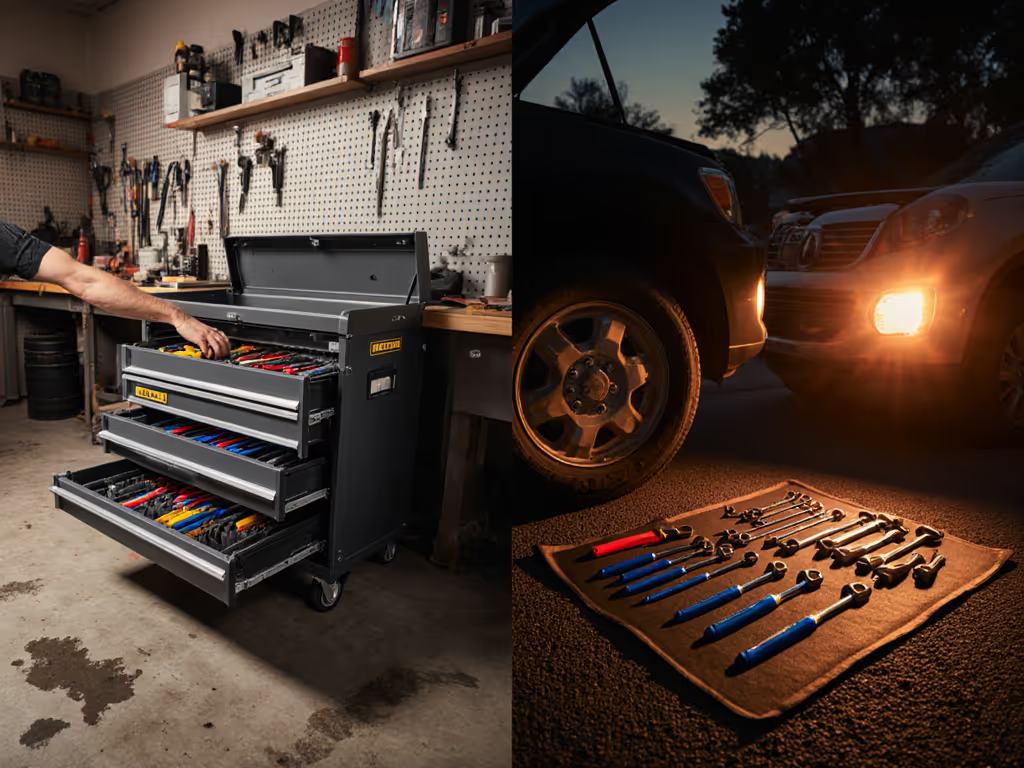
3D Printed Tool Organizers: Custom Fit, Fast Access
By Aisha Khan • 12th Apr
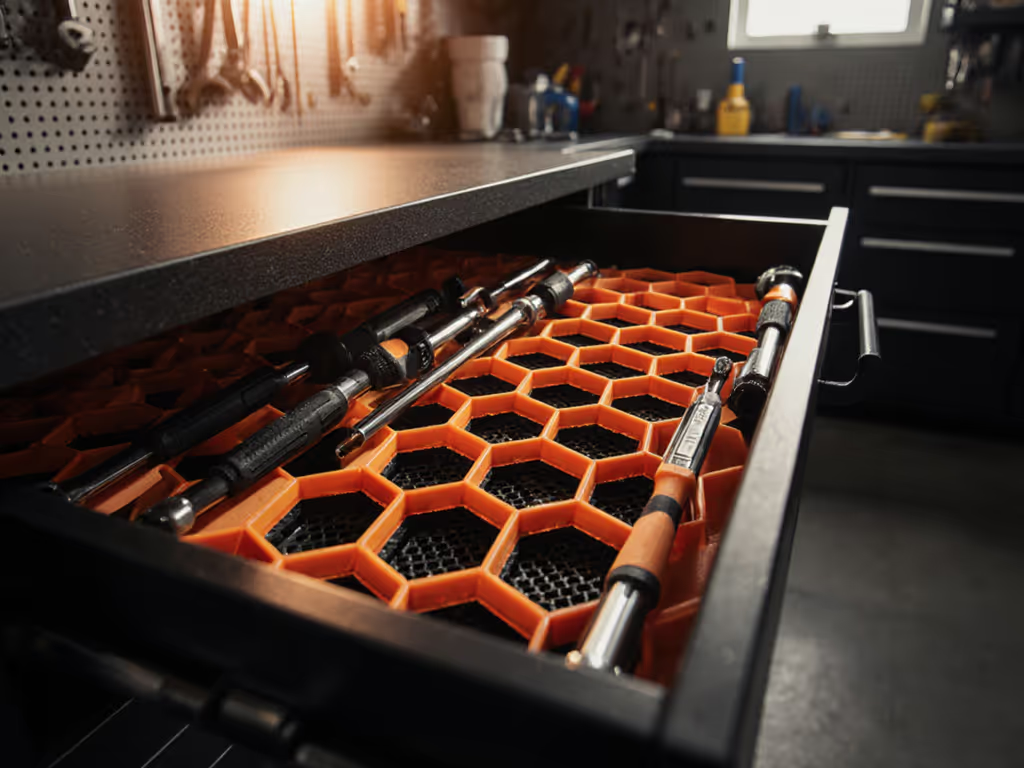
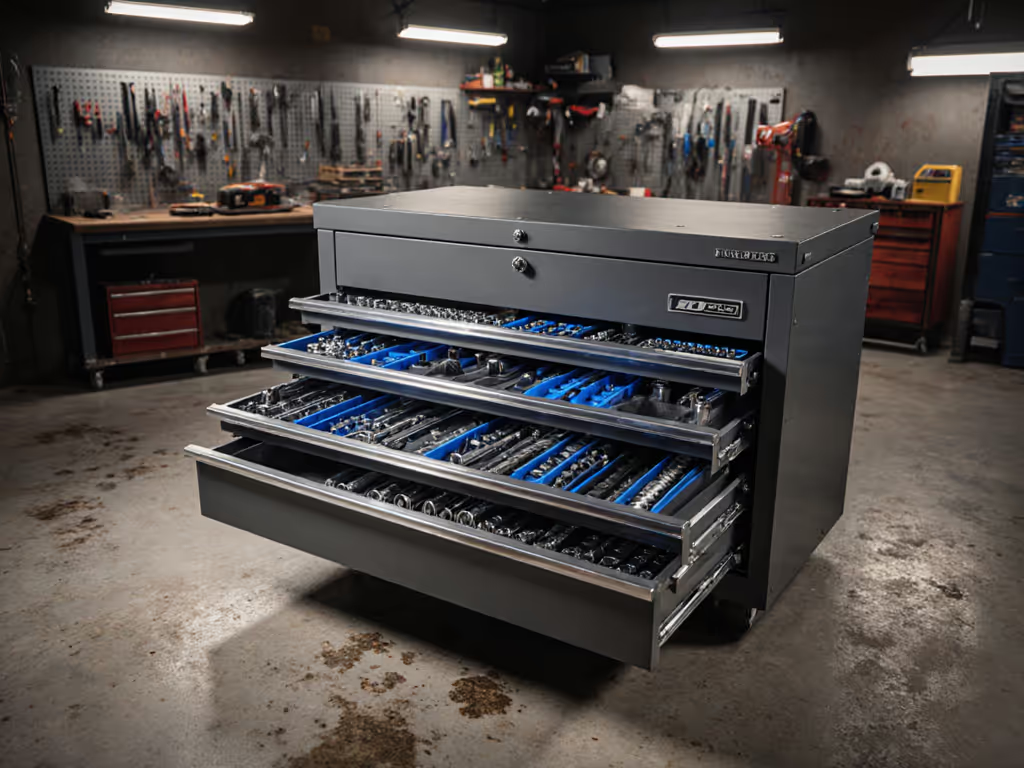
A 3D printed tool organizer transforms a chaotic drawer into a precision-indexed tool storage solution that cuts retrieval time measurably. For shops running on takt time, every second lost hunting for a wrench is a second stolen from throughput. Custom-fit dividers, shadowboards, and modular inlays printed in durable thermoplastic deliver the speed that off-the-shelf foam can't match, because they're built around your actual tools, not some designer's guess.
The Problem: Search Time Masquerading as Work
I spent a night timing crews at a heavy equipment shop, stopwatch in hand. The pattern was brutal: technicians spent an average of 40 seconds per job hunting for the right socket, wrench, or fastener. In a 10-task shift, that's over six minutes of pure waste per person. Multiply it across three bays and five days a week, and you're hemorrhaging hours.
The culprit wasn't stupidity or laziness. It was layout. Drawers packed with tools in no coherent order force extra steps: remove fastener trays to reach power tools, shuffle through cables to find a probe, bend and search instead of grab and go.
Worse, when tools aren't indexed visually, techs don't know when something's missing until the moment it's needed. A borrowed drill that never made it back doesn't trigger an alarm; it triggers a scramble. Standardized foam inserts help, but they're generic, inflexible, and painful to rework when your tool set evolves.
Traditional tool chest foam shadows wear, chip, and migrate. Slides fail. Inlays that should be swapped after six months become permanent fixtures because rework feels like punishment.
The Agitation: Layout Chaos Kills Metrics
In lean environments, inventory sitting in motion is inventory bleeding time. That applies to tools too. A drawer that forces you to move five inches to the left, reach around a battery charger, and lift nested trays to find a screwdriver is a spaghetti diagram in physical form.
Consider the math: if a crew of five techs each wastes eight minutes per shift on tool hunting, and you pay $30/hour loaded labor, that's $20 in waste per person per day. Across a year, a five-bay shop loses roughly $25,000 to tool-search inefficiency alone. And that's before counting missed deadline penalties or rushed jobs that fail inspection.
Standardization compounds the problem. One tech's "organized" drawer is another tech's locked mystery. When techs rotate across bays or cover for absence, they don't know the map. A 5S mindset demands visual control and repeatability; generic foam doesn't scale that.
The Solution: Precision Printing Meets Workflow Needs
3D-printed tool organizers solve this by building storage around your specific tools and motion patterns. Unlike injection-molded one-size-fits-all inserts, custom prints let you:
- Map tool placement to reach frequency. Most-used items go front-and-center; deep-storage tools in the back. Optimize for your actual workflow, not a generic hierarchy. A data-driven approach like the 80/20 tool organization method helps prioritize high-frequency tools.
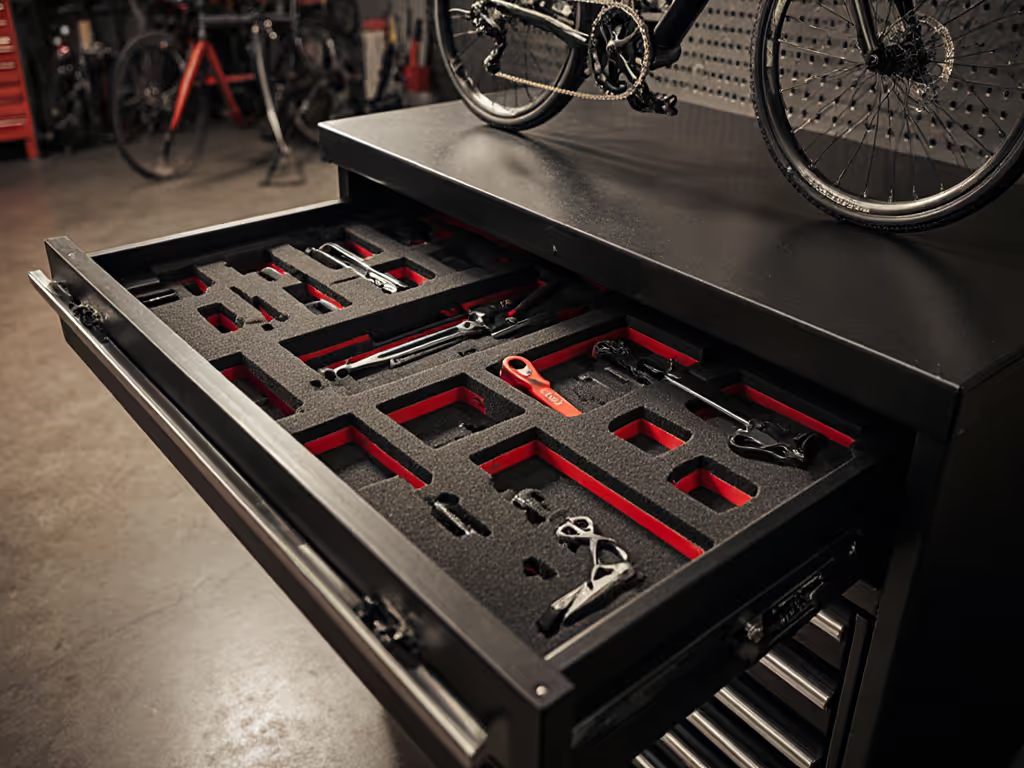
- Index every slot visually. A shadowboard printed from CAD for tool organization shows at a glance what's missing. No blind guessing; no late discovery that the torque wrench never came back.
- Scale without waste. When you add a new tool or retire an old one, reprint only the drawer section that changes. No foam rework; no throwing away half an insert because one slot needs tweaking.
- Standardize across bays. Print identical drawer maps for your primary toolset across three or ten bays. Every tech finds the 10mm socket in the same drawer, same location, every shift. Reduces cognitive load and cross-coverage friction dramatically.
The key metric: cycle time. A well-designed printable tool foam alternative that aligns slots to tool frequency cuts retrieval time to under 10 seconds for 90% of common tasks. From drawer open to tool in hand: measured, predictable, repeatable.
Designing Your System: CAD and Calibration
Do-it-yourself tool storage starts with a spaghetti diagram of your current workflow. Walk a tech through a full job cycle: how many times do they open each drawer? Which tools go together? What gets grabbed in sequence?
Then move to CAD for tool organization. Measure your tools: socket sets, wrenches, pliers, probes, meters. For fast access to these staples, follow our socket and wrench drawer layout guide. Import those dimensions into parametric design (free tools like Fusion 360 or Tinkercad let you build modular cavity arrays in hours, not days). Design for full-extension slides so techs don't reach past the drawer face.
Print in durable thermoplastic: PETG or ASA hold up better than PLA under shop solvents and UV exposure. Layer-by-layer precision beats foam shadows: tight tolerances mean zero rattle, zero tool creep.
Layout matters. A tool chest top organizer needs to reflect your highest-traffic items: cordless drill, socket set, multi-meter. A side-mounted tool storage solution might hold long-reach items or specialty hardware. Vertically oriented shadow slots (tool silhouettes) make missing items jump out in a glance. For metal hand tools, a magnetic tool holder system can complement printed trays for instant grabs.
Scaling and Standardization
Once you've designed and printed a master drawer insert, replicate it across your bays. Take a baseline measurement: time and motion before and after setup. I've seen cycle-time improvements of 18-24 seconds per job once crews adapted to the new layout. Over a 40-task week, that's 12-16 minutes of freed time per tech.
Document the drawer map. Label each cavity with tool name and part number. Print a laminated reference card for new hires or visiting techs. Audit quarterly: if a tool is missing two weeks in a row, you've found a training gap or a lost-tool pattern worth investigating.
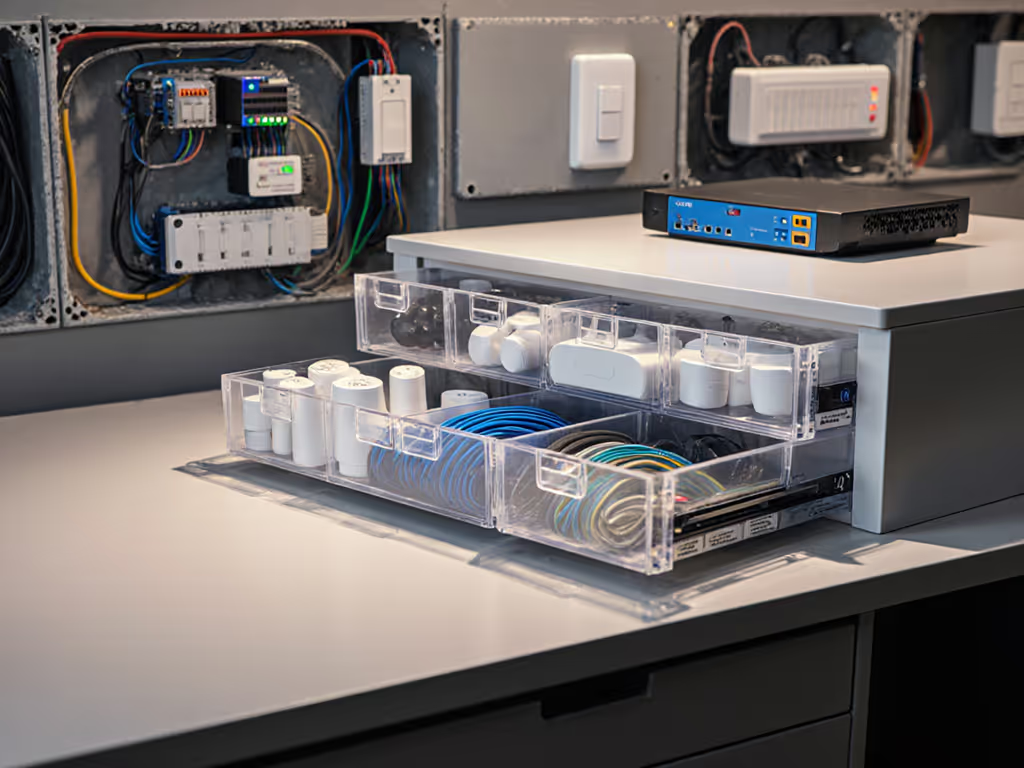
Modularity wins here. Printed organizers aren't monolithic. Print modular bento-style trays for small fasteners, cable-management risers for cordless chargers, and vertical shadow slots for powered tools. Mix and match inside the same drawer. When your tool set shifts, swap only what changed.
Beyond Speed: Reliability and Audit Trail
A secondary benefit: tool control. In regulated environments (aerospace, medical device, automotive OEM supply), shadow boards create a visual audit trail. Missing tools are visible. That matters for FOD (foreign object damage) control, compliance, and security.
Durable prints also extend the life of your drawer ecosystem. Foam compresses, breaks, and migrates; thermoplastic holds its shape. A printed insert lasts 2-3 years minimum in heavy use; that's one reprint cycle against multiple foam replacements.
Summary and Final Verdict
3D printed tool organizers aren't a luxury accessory: they're a throughput multiplier disguised as storage. When your layout cuts search time from 40 seconds to under 10 seconds, you've recovered 30+ seconds per task, which compounds across your team, your week, and your year.
The investment is modest: a used printer, thermoplastic filament, and design time. The return is measurable in seconds-per-cycle and dollars saved to downtime. For shops running on deadline margins, that's the difference between delivering on time and explaining delays.
Stopwatch says the layout works; the clock never lies. If you're ready to stop hunting for tools and start hunting for throughput gains, a CAD for tool organization project and a simple print run should be your next efficiency move. Map your workflow, design tight, print once, replicate across bays, and watch your team find every tool faster than they remember looking for it.
Related Articles