

Sustainable Tool Storage: Built for Workshop Durability
By Tomáš Novák • 1st Dec
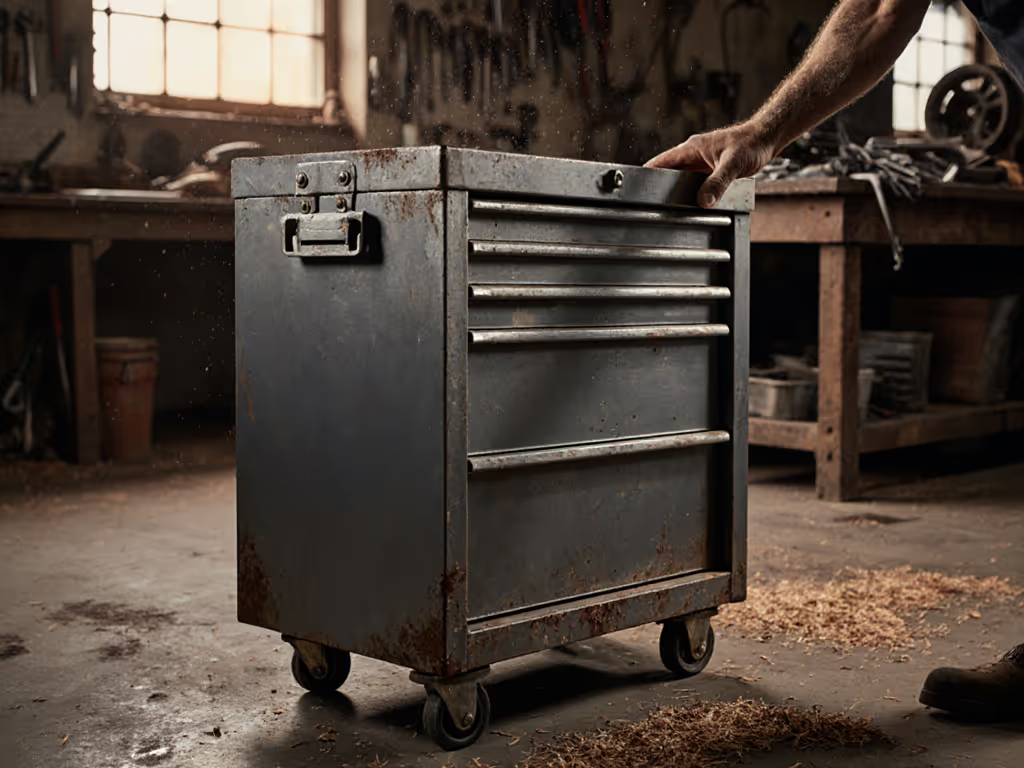
If it rattles, it's stealing seconds from you. I learned this the hard way when my first so-called 'green' mobile chest fell apart on a hospital retrofit (drawers creeping open, tools bouncing onto concrete, and precious minutes vanishing with every dropped socket). That's when I realized true sustainable tool storage isn't just about recycled materials or carbon footprints, it's about systems that survive the daily grind without creating more waste through premature failure. Eco-friendly tool chests must first prove they're field-tough before earning the 'sustainable' label in my shop.
The Green Mirage of Workshop Storage
Marketing Spin vs. Shop Reality
Walk through any trade show, and you'll find bins, cabinets, and chests plastered with eco-certifications and recycled content claims. But sustainability requires more than material composition, it demands endurance. When a chest's bioplastic latches fail after three jobsite moves or recycled-content drawers warp from shop humidity, you're not 'going green'; you're generating more landfill waste and wasting billable hours. If humidity is a recurring challenge in your shop, review our Climate-Controlled Tool Storage Guide for prevention strategies that keep materials stable. True sustainability means systems that last decades, not just the length of warranty coverage.
I've watched too many well-intentioned shops deploy 'sustainable' storage that quickly becomes workshop clutter. Flimsy recycled material tool boxes develop play in drawer slides within weeks. Cardboard-based organizers degrade when exposed to shop oils. Even some bamboo chests splinter under vibration stress. The irony? These 'green' solutions often create more waste than their durable counterparts, contradicting the very sustainability they claim to promote.
The Hidden Cost of Eco-Compromise
Sustainability metrics must include total cost of ownership, not just upfront eco-credentials. Consider:
- A chest lasting 3 years requires 3x the material, shipping, and installation labor of one lasting 15+ years
- Failed components in 'green' storage often aren't serviceable, forcing complete replacement
- Time lost hunting tools from disintegrating organizers costs shops $1,200+ weekly in wasted labor (based on industry productivity studies)
Workshop veterans know: if a chest can't survive vibration and rattle checks over 100 job site transitions, its sustainability claims are meaningless. For secure moves and loading techniques that stop drawers from creeping open, see our tool chest transport guide. Durability is the foundation of true green workshop organization (without it, you're just recycling the problem).
Defining Real Sustainable Storage
Beyond Material Composition
True sustainable workshop practices start with durability metrics that matter in the field:
- Caster floor-interface integrity on concrete, gravel, and painted surfaces
- Latch integrity focus that maintains drawer security through bumps and vibration
- Full-extension slides that operate smoothly at 90% capacity, not just when empty
- Serviceable parts that can be replaced without discarding the entire unit
I've seen supposedly eco-friendly chests with excellent recycled content ratings fail catastrophically because manufacturers prioritized material story over vibration resistance. A drawer gliding open during transport doesn't just risk tool damage, it triggers that domino effect of lost time: stop work, reorganize, retrace steps, and restart. Durability isn't a spec sheet, it's whether your day derails on mile two.
The Time-Sustainability Equation
My hospital retrofit disaster taught me that sustainability must account for time as a resource. When hardware fails, you're not just replacing physical components, you're burning irreplaceable minutes. Every dropped tool, every drawer reorganization, every trip back to the shop for a 'missing' wrench accumulates. That's why I bias toward overbuilt hardware that might weigh more initially but protects your most valuable asset: time.
Consider this: A technician earning $35/hour loses $5.83 for every minute spent recovering from storage failures. With 10 such incidents daily (a conservative estimate based on my vibration and rattle checks), that's nearly $60 in wasted labor daily, $1,200 weekly. True sustainable workshop organization pays for itself in recovered time within months.
Building Blocks of Sustainable Durability
Critical Components That Survive Real Work
Caster Quality Matters Most
Your storage system's mobility determines its sustainability. Green workshop organization starts with casters that maintain floor contact through vibration:
- Dual-wheel designs distribute load better than single wheels on gritty floors
- Molded polyurethane outlasts rubber on oily surfaces without developing flat spots
- 5-inch minimum diameter for smooth transitions over floor seams and debris
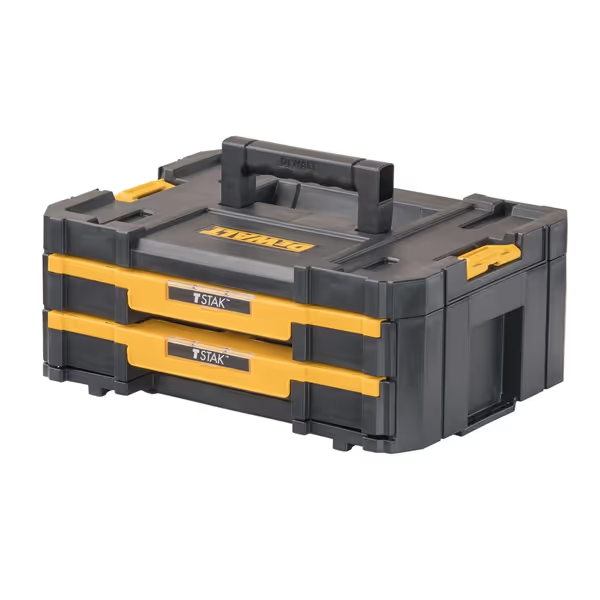
DEWALT TSTAK Double-Drawer Organizer
Portable, stackable storage for small tools and parts organization.
$31.44
Load Capacity16.5 lbs
Load Capacity16.5 lbs
Pros
Durable build with strong dividers for small parts.
Stackable and portable for customized storage on the go.
Ball bearing slides ensure smooth drawer operation.
Cons
Drawer latching system receives mixed feedback.
Customers find the tool box to be well-constructed and sturdy, with strong dividers and good storage capacity for hand tools. They appreciate its organization features and portability, with one customer noting it's particularly suitable for RVs.
Customers find the tool box to be well-constructed and sturdy, with strong dividers and good storage capacity for hand tools. They appreciate its organization features and portability, with one customer noting it's particularly suitable for RVs.
When evaluating recycled material tool boxes, first test the caster floor interface under full load. Too many eco-options use lightweight casters that fail within months, forcing you to carry chests when mobility is precisely why you bought them.
Vibration-Resistant Latching Systems
A chest's ability to maintain latch integrity during transport separates sustainable storage from disposable. Look for:
- Dual-point locking mechanisms that secure drawers top AND bottom
- Self-adjusting latches that compensate for frame flex under load
- Metal components in critical stress points, not just recycled plastic
Many so-called sustainable chests use single-point latches that wear quickly. When the top drawer creeps open during transport, it compromises the entire stack's stability. Perform this field test: load the chest to 80% capacity, then roll it over a 1/4" threshold. If any drawer shifts, it's not ready for real work.
Sustainable Power Management
Modern eco-friendly tool chests must integrate cord management without compromising sustainability: If you rely on onboard charging, compare our integrated power station tool chests to find safe, ventilated options.
- Integrated cable channels using recycled content polymers
- Ventilated charging compartments that prevent battery thermal events
- Tool chest best designs include pass-through ports for external power without opening drawers
The most sustainable power solution is preventing cord damage; each replacement cable generates plastic waste. Look for routing systems that secure cords without kinking, extending their service life.
Implementation Strategy for Lasting Sustainability
Your Sustainable Storage Checklist
Before investing in any tool chest best claims, subject it to these field tests:
- Vibration endurance: Load to rated capacity, then roll over 50 feet of rough concrete
- Latching integrity: Tilt chest to 15 degrees, zero drawer movement should occur
- Caster durability: Push/pull 100 feet including thresholds, then check for wheel deformation
- Serviceability assessment: Can you replace key components (latches, casters) without special tools?
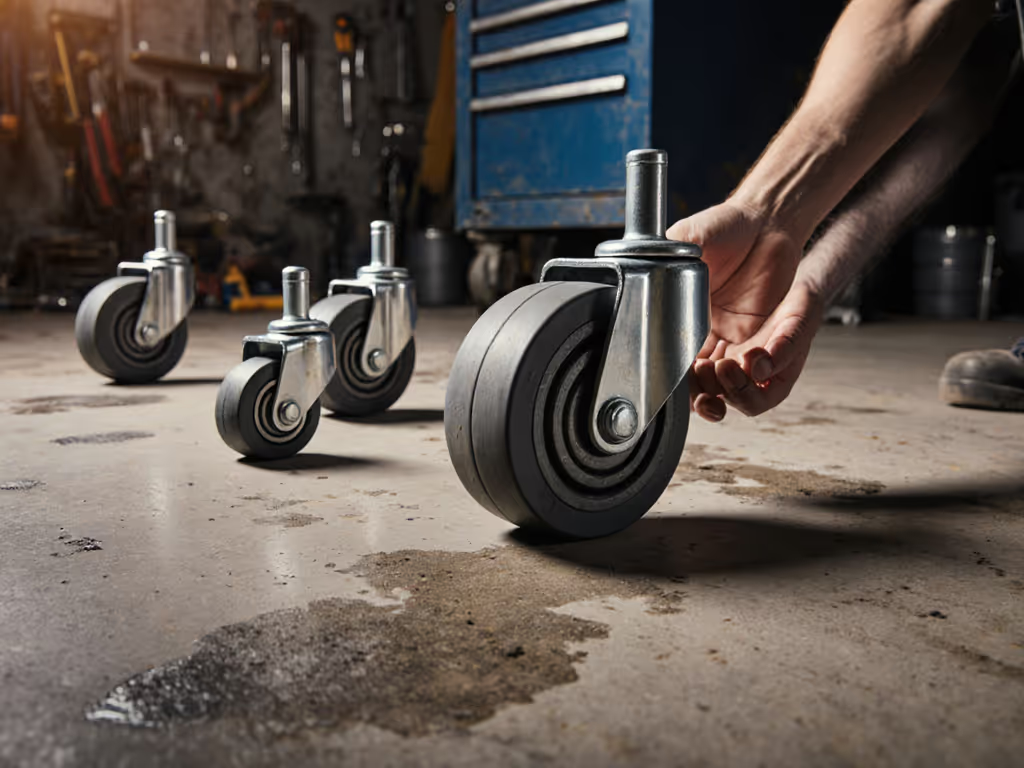
Sustainable Workflow Integration
Green workshop organization must enhance (not hinder) your 10-second rule for tool access. For pro setups that hit that benchmark, explore our 10-second retrieval tool chests. Consider:
- Will recycled-content dividers survive daily solvent exposure?
- Can drawer labeling systems withstand pressure washing without fading?
- Does the chest's footprint maximize space efficiency without creating workflow obstructions?
Secure, then move. A sustainable chest stays organized through transport, not just when stationary.
Final Verdict: What Makes Storage Truly Sustainable
Real sustainable tool storage isn't defined by its material composition alone, it's measured by how long it performs without generating replacement waste or stolen time. The most eco-friendly tool chest is the one you never need to replace. When evaluating options, prioritize vibration resistance and serviceability over marketing claims. Durability is workflow: every failure steals minutes you can't buy back.
Before you invest in any 'green' storage solution, ask yourself: Will this survive my worst day? If it can't maintain drawer security through 100 job site transitions, its sustainability claims are empty. True sustainable workshop practices start with systems that keep working long after the eco-certifications have faded. That's not just green, it's good business.
Secure, then move. Your time is too valuable to waste replacing storage that should have lasted.
Related Articles
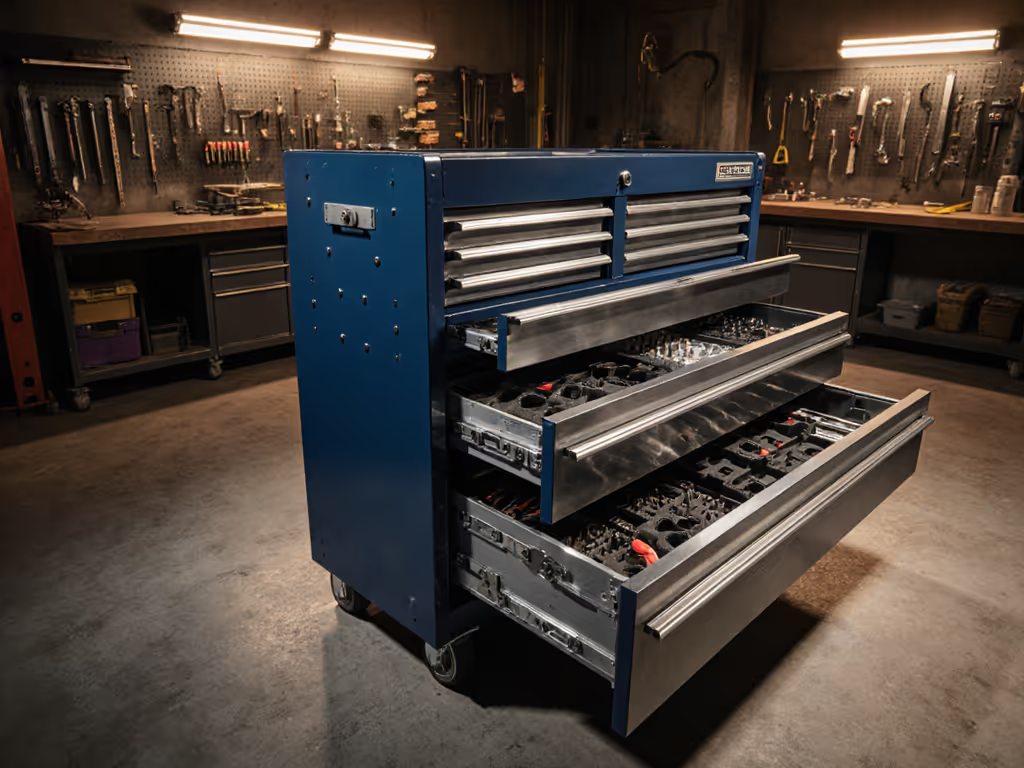
Tool Chest Large Capacity: Truth Beyond Marketing Claims
Learn how to calculate true, usable drawer space - not inflated cubic‑inch claims - and prioritize features like full‑extension slides, stability, and cycle ratings to cut retrieval time. A quick audit guides you to storage that boosts throughput and uptime instead of wasting budget on empty volume.
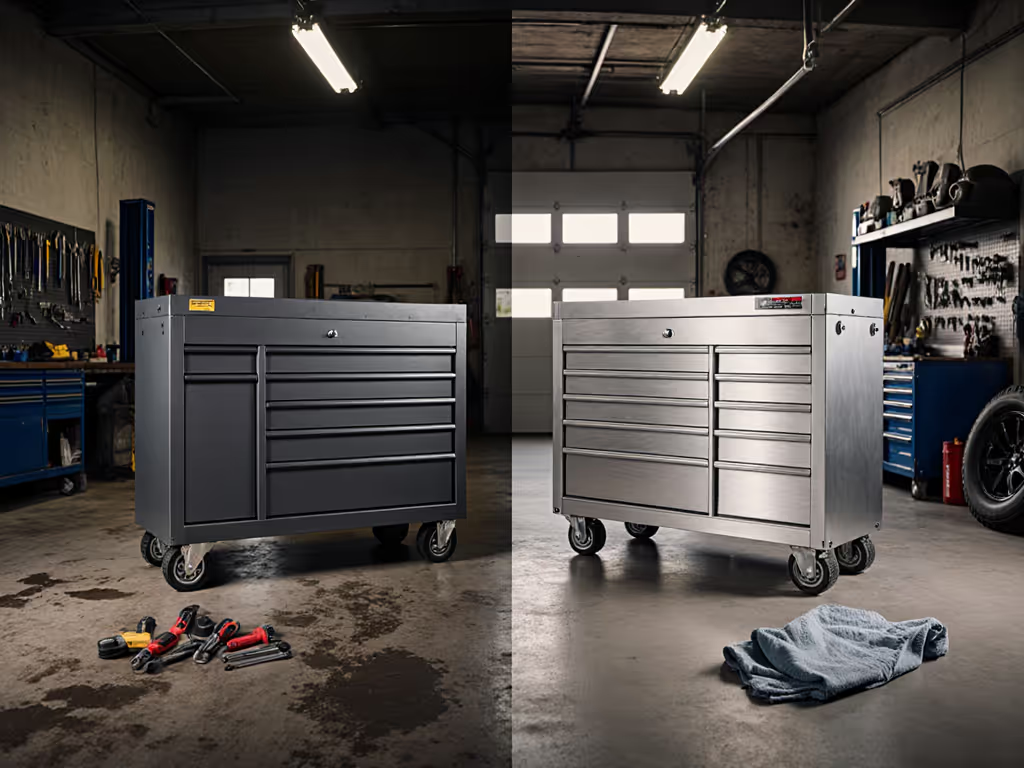
Steel vs Aluminum Tool Chests: Weight & Durability Trade-Offs
Break down the real-world trade-offs between steel and aluminum - durability, corrosion, weight, and repairability - and how they impact mobility and uptime. Use practical criteria and quick rattle/slide tests to choose the chest that fits your environment and workflow.