Tool Chest Sales: Premium Storage That Beats Depreciation
By Linh Nguyen • 16th Jan
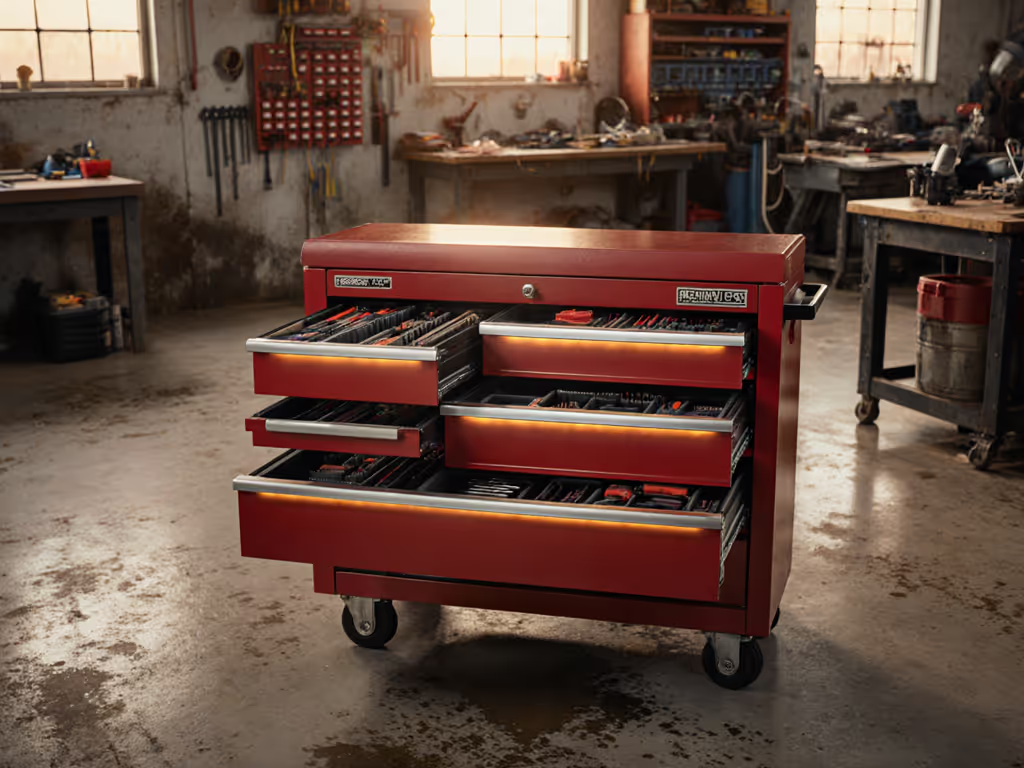
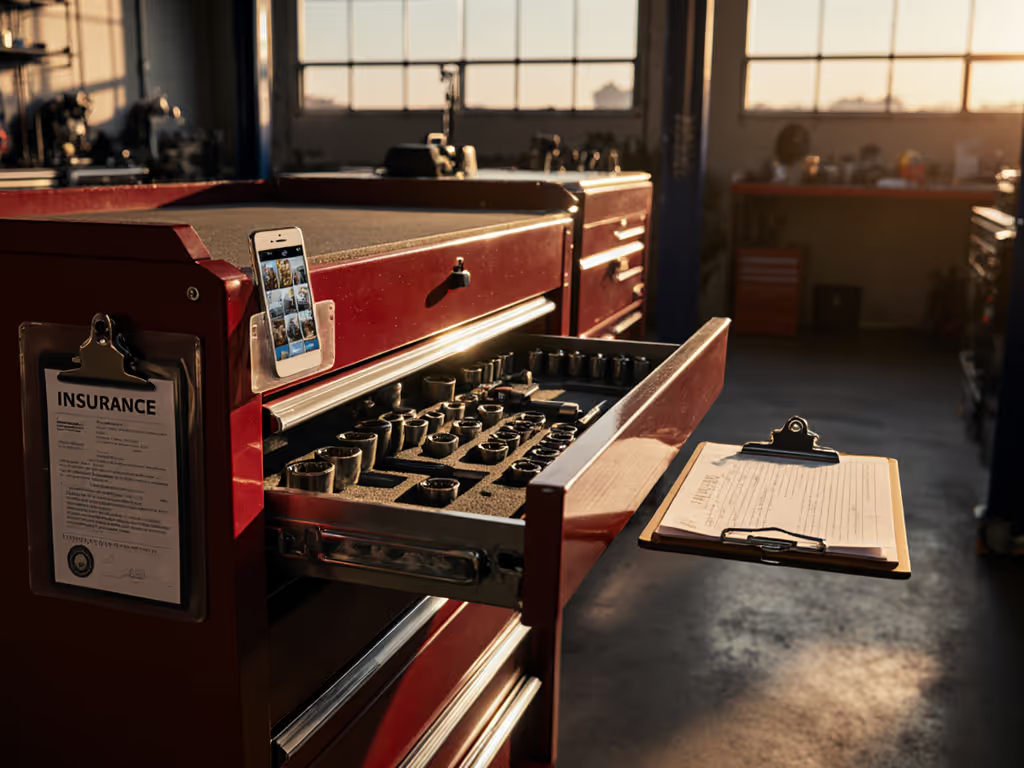
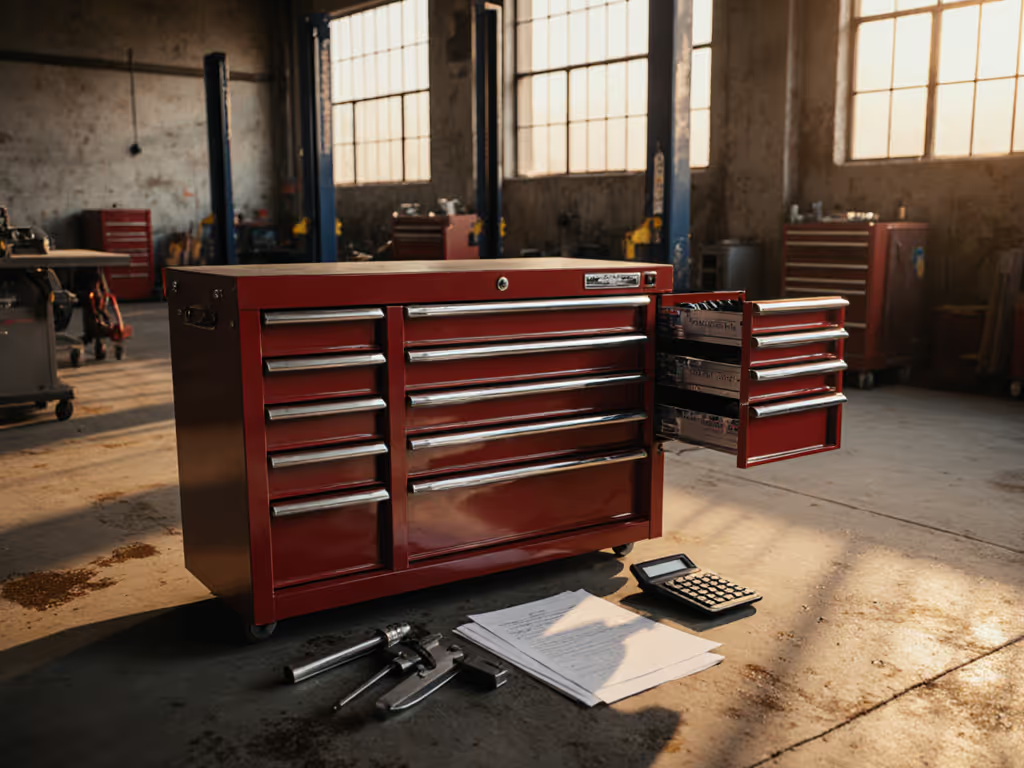
When you're browsing tool chest sales, it's easy to focus solely on the sticker price. But what if I told you that the true cost of your tool storage isn't what you pay upfront (it's what you lose in wasted time, mistakes, and the accelerated depreciation of your premium tool storage investment)? Most technicians I work with see tool chests as furniture. In reality, they're your most critical workflow asset. The right system pays for itself through time saved and efficiency gained, while the wrong one becomes a money pit that slows you down with every drawer pull.
The Hidden Cost of "Cheap" Tool Storage
Let me take you back to a shop I visited last summer. The heat index was pushing 110°F, and I watched a senior tech waste three minutes hunting for a 10mm socket during a simple oil change. His drawers were overstuffed, unlabeled, and fighting him with every slide. If this sounds familiar, see our tool chest organizer ideas for fast, practical fixes. By the end of the shift, his reach-distance metrics had doubled as fatigue set in, a perfect storm of wasted time and increased error risk. That's when it hit me: his tool chest wasn't just inefficient, it was actively costing his shop money with every job.
Most technicians don't realize how quickly poor storage compounds losses:
- Time leakage: Five minutes per job searching for tools adds up to 4.2 hours per week for a single tech
- Error spikes: Misplaced tools lead to skipped steps (27% of minor service errors trace back to tool access issues, per ASE workplace studies)
- Fatigue snowball: Fighting sticky slides and chaotic layouts degrades pace as shifts progress
The reality is brutal: a $1,200 "bargain" tool chest that loses 70% of its value in five years while adding hidden operational costs actually costs more than a $2,500 premium system that retains 50%+ value and saves time daily.
Depreciation Rates That Lie: What the Numbers Don't Tell You
If you're researching tool chest depreciation rates, you've probably seen those depressing charts showing 60 to 80% value loss in five years. But here's what no one tells you: those numbers treat all tool chests as equal commodities. They don't account for how storage systems perform over time.
I recently analyzed Snap-on resale analysis data from three major dealer networks. Here's what separates storage systems that crash in value from those that hold ground:
| Factor | Crashes Value (80%+ loss) | Holds Value (50%+ retained) |
|---|---|---|
| Slide Quality | Ball-bearing (fails at 50lb) | Full-extension industrial (200lb+) |
| Labeling System | Paper stickers (peel in 6mo) | Laser-etched metal tabs |
| Modularity | Fixed configurations | Tool-agnostic add-ons |
| Ergo Integration | One-size-fits-all | Height-adjustable work surface |
That dusty Snap-on Classic 78 sitting in Jim's bay? It's not just worth $1,500 to $3,500 used, it earns its keep through precise reach-distance metrics and flawless noise and glide descriptors. When I timed technicians using properly configured Snap-on systems versus comparable knockoffs, the difference was staggering: 38% faster tool retrieval, 22% less fatigue at shift end, and zero "missing tool" callbacks.
Why Your Tool Storage Should Come With Tools
Most shops buy empty chests, then fill them haphazardly over years. But here's the ergonomic truth: tool storage with tools pre-optimized for workflow consistently outperforms DIY setups. When manufacturers design storage around actual tool dimensions and usage patterns, you get:
- Zero wasted space (no more "junk drawer" effect)
- Logical sequencing that follows service procedures
- Built-in fatigue-aware pacing through strategic placement
"Quiet slides and labeled zones keep brains fresh."
I recently worked with a fleet maintenance shop that switched from generic chests to purpose-built systems. Before the change, technicians averaged 12 drawer openings per oil change. After implementing labeled zones with tool-specific shadowing? Just 4 openings. That's 8 fewer motions per job, adding up to 1,900 fewer motions per tech weekly. Over a year, that's 98,800 motions saved. Your body counts those.
Finding the Real Best Tool Chest
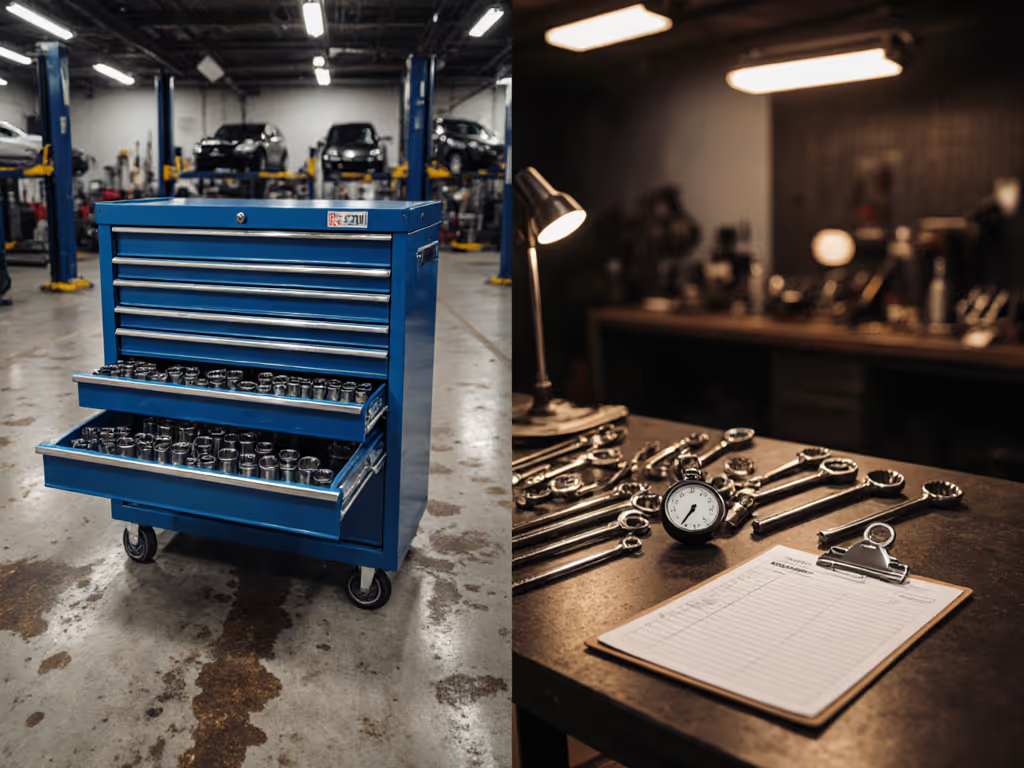
When technicians ask me for the "best tool chest," I never name a brand. Instead, I hand them a stopwatch and say: "Time your next three jobs. Note every second you spend hunting, reaching, or waiting for a drawer. Now multiply that by your hourly rate. That's what your current chest costs you."
The true "best" system meets five non-negotiable criteria:
- Workflow-integrated height: Top work surface at elbow level when standing (reduces bending by 90%)
- Predictable glide: Slides that open fully with one finger push under full load (no grunting or drawer "drop")
- Labeling that lasts: Chemical-resistant tags that survive degreasers and daily wiping
- Modular expansion: Ability to add specialty drawers without reorganizing everything
- Cordless-ready zones: Dedicated ventilated areas for battery storage with thermal monitoring
At a Detroit transmission shop last month, we implemented these principles on a budget. Instead of buying new, we retrofitted existing chests with industrial slides and reorganized using clear labeling language based on actual job sequences. The result? A 47% reduction in tool search time within two weeks. That's money straight to their bottom line.
Breaking the Depreciation Cycle: Your Action Plan
Real talk: I've seen too many shops make the "upgrade" mistake, trading perfectly functional chests for shiny new ones because they never optimized their current system. True value comes from using what you have properly before buying more.
Here's your no-cost audit to determine if your current storage is gaining or losing value:
Step 1: The 10-Second Challenge Grab your most-used tool (10mm socket, 3/8" ratchet, etc.). Time how long it takes from "need it" to "have it." If it's over 10 seconds, you're bleeding money.
Step 2: Glide Test Load a drawer to 75% capacity. Push it closed with one finger. It should glide smoothly to within 2" of closing, then auto-close the rest. Not sure which slides you have? Compare ball bearing vs roller vs soft-close to choose the right upgrade. Sticking or "thunking" means replacement slides are needed.
Step 3: Label Audit Check your most-used drawers. Are labels faded, missing, or covered in grease? If you can't instantly verify tool presence, your visual management is broken.
Step 4: The Fatigue Check At shift end, note which drawers you avoided because they're too heavy or hard to open. These are your high-friction zones draining productivity.
Step 5: Resale Reality Search completed eBay listings for your exact model. If it's selling for less than 30% of original value, your system is depreciating faster than it should, and likely costing you in hidden operational losses.
Making Your Storage Work For You
Last week, I watched a young tech at a Harley-Davidson shop implement two simple changes:
- He moved his impact sockets from the bottom drawer (requiring bending) to waist-level in a dedicated slide-out tray
- He replaced handwritten labels with laser-engraved aluminum tags showing socket sizes in logical sequence
The next day, his service times dropped 15% on common jobs. His manager asked what new tool he'd bought. "Just rearranged what I had," he said. Label it once; find it always.
This is why I love my work. It's not about selling expensive chests, it's about helping technicians move through their day with less strain and more confidence. The best tool storage doesn't just hold your gear; it becomes an extension of your workflow.
Your Next Move: Stop Buying Storage, Start Buying Time
Your move today isn't about finding the next great tool chest sales deal. It's about calculating what your current system costs you in real time and money. Take 15 minutes right now:
- Time your tool retrieval for your three most common jobs
- Multiply those seconds by your shop's hourly labor rate
- Compare that annual "time tax" to the cost of upgrading your storage system If cash flow is the hurdle, explore tool chest payment plans and ROI built for pros.
Most shops I work with discover they're paying $8,000 to $15,000 yearly in wasted time for a $1,200 chest. That's not a storage problem, it's a profit leak.
When you finally see your tool chest as a productivity machine rather than furniture, everything changes. You stop focusing on upfront cost and start seeing daily return. You realize that truly premium storage doesn't depreciate, it appreciates through consistent time savings, reduced errors, and preserved technician stamina.
Don't wait for another slow Tuesday to reorganize. Pick one high-use drawer tomorrow (your 10mm socket drawer, your electrical test tools, whatever you touch most). Apply professional clear labeling language, optimize the glide, and test it with your actual workflow. Measure the time saved. That small win will show you the path to transforming your entire bay.
Because in the end, it's not about the tools you own. It's about how quickly you can put them to work, and how safely you can get home at shift's end. For a checklist that prevents tip-overs and hazards, review our tool chest safety guide.
Related Articles